
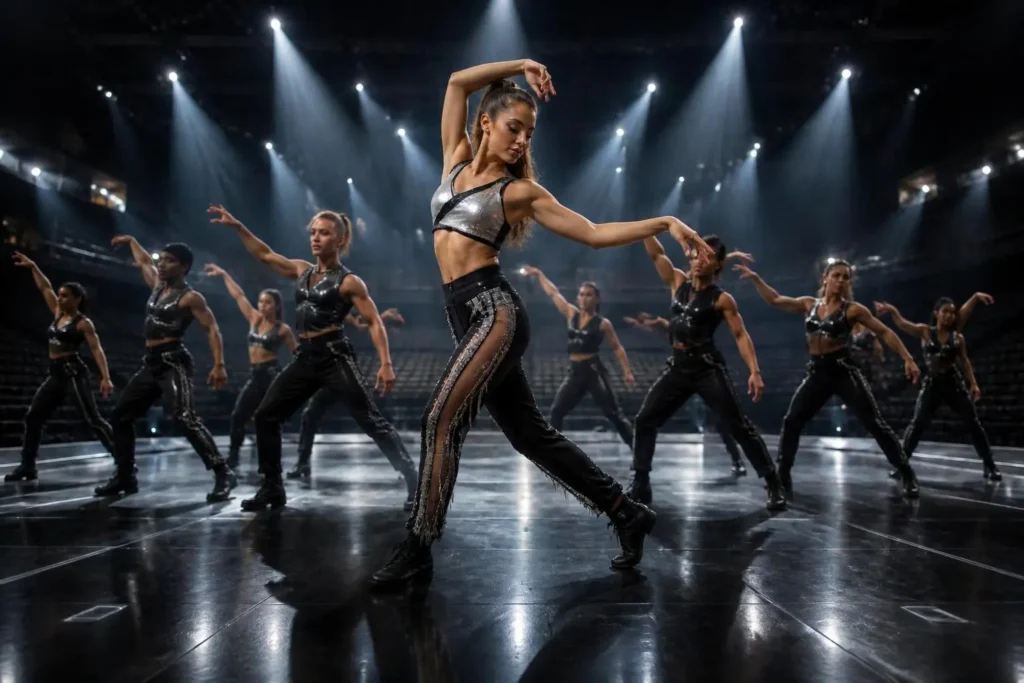
Quick answer: Backup dancers are usually versatile commercial dancers who pick up choreography fast, look sharp on camera and are known by the choreographers who work with artists. To get there: train in commercial styles, take classes from working choreographers, build a strong reel, attend auditions and network in the commercial scene, usually in a city where music videos, tours and TV work happen.
What Backup Dancers Actually Do
Backup dancers perform alongside music artists:
- Tours and concerts.
- Music videos.
- TV performances and award shows.
- Promotional events and brand campaigns.
Work can be intense: long rehearsals, travel, and needing to learn and perform choreography quickly.
The Skills You Need
| Skill | Why it matters |
|---|---|
| Fast choreography pickup | Rehearsal time is short |
| Versatility | Artists use hip-hop, jazz-funk, heels, contemporary and more |
| Clean technique | Sharp, synchronized group work |
| Camera and stage presence | You’re part of the artist’s show |
| Stamina | Long rehearsals and full concerts |
| Professionalism | Reliability and discretion with high-profile clients |
Step 1: Train in Commercial Styles
Focus on the styles artists actually use: hip-hop, jazz-funk, choreography, heels, contemporary and some freestyle. Classes at commercial studios are ideal because that’s where the relevant choreographers teach.
Step 2: Get Fast at Learning Choreography
Auditions and rehearsals move quickly. Take lots of choreography classes and practice picking up combos in one or two runs. See how to learn fast choreography without getting lost.
Step 3: Get Known by Choreographers
Artists’ choreographers and creative directors usually pick the dancers. Many first hear of them through their classes, recommendations or social media. Take their classes consistently, work hard, and make a good impression. Read why networking matters for a dance career.
Step 4: Build a Commercial Reel
Your reel should show commercial choreography, versatility and camera presence. See how to build a dance portfolio that gets noticed.
Step 5: Go to Auditions
Watch for open calls posted by choreographers, agencies and production companies. Prepare properly and treat every audition as a chance to be seen, even if you don’t book it. See dance audition tips and what casting directors look for in dancers.
Step 6: Consider an Agency
Once you have training and a reel, a commercial dance agency can connect you with auditions you wouldn’t otherwise hear about. Research agencies carefully and be cautious of any that charge large upfront fees.
Step 7: Be in the Right Place
Most backup work clusters in cities with strong music and entertainment industries. Many dancers relocate, at least for a while, to be close to the work and the classes.
Step 8: Protect Your Body and Reputation
Tours and long rehearsals are physically demanding. Strength, conditioning and recovery matter. And in a small industry, being reliable, positive and discreet keeps you getting called back.
Frequently Asked Questions
How do you become a backup dancer for artists?
Train in commercial styles, get fast at picking up choreography, take classes from working choreographers, build a commercial reel, audition and network in a city with music industry work.
Do backup dancers need an agent?
Not always, but agents can help you access more auditions once you have training and a reel.
What styles do backup dancers need?
Usually hip-hop, jazz-funk, choreography, heels and contemporary, plus strong freestyle and versatility.
How do I get my first backup dancing job?
Through auditions, recommendations from choreographers you’ve trained with, and smaller music video or event work that leads to bigger jobs.
Where to Start Today
Find two choreographers who work with artists you admire, look up where they teach, and book one of their classes.
Leave a Reply