
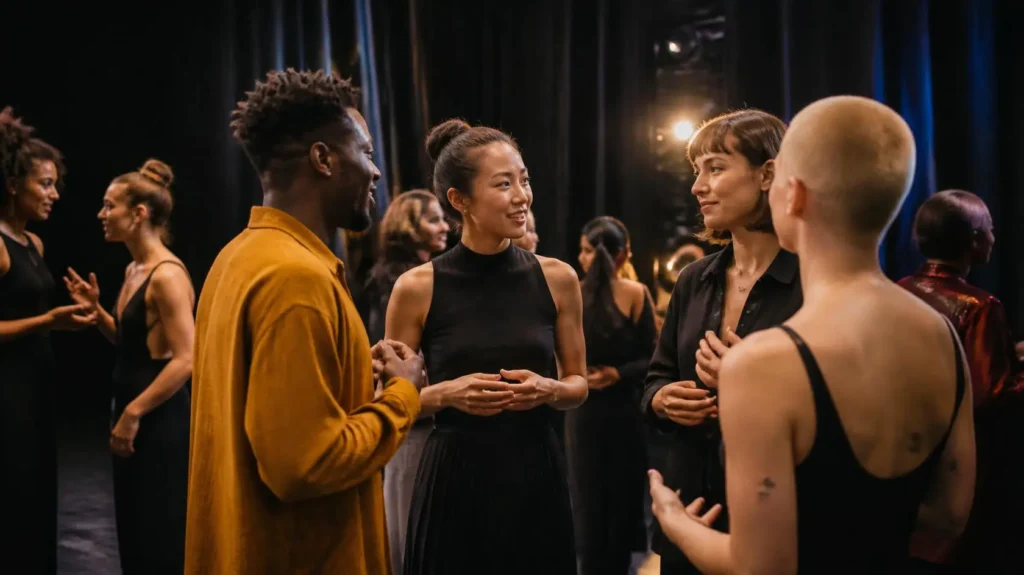
Quick answer: In dance, many jobs are filled through recommendations before they’re ever posted, so the people who know your dancing, and know you’re reliable, are your biggest source of work. Networking for dancers isn’t about handing out cards. It’s showing up regularly where dancers gather, supporting others, being easy to work with and staying in touch.
“But I Hate Networking”
Many dancers do. It can feel fake or pushy. The good news: dance networking mostly happens naturally, through things you probably already enjoy:
- Taking classes.
- Going to jams and battles.
- Training with other dancers.
- Supporting other people’s events and content.
You don’t need to “sell yourself.” You need to be present and genuine.
Why It Matters So Much in Dance
- Choreographers hire people they know or people recommended by people they trust.
- Short-notice jobs go to whoever comes to mind first.
- Teachers recommend students for opportunities.
- Other dancers pass on gigs they can’t take.
- Reputation travels fast in a small industry.
1. Take Classes With Working Choreographers
Regular classes put you in front of people who hire. Show up consistently, work hard, stay after to say thank you, and let them see your growth over time.
2. Go Where Dancers Gather
Jams, battles, workshops, showcases, open sessions and festivals are where relationships form. You don’t have to be the best dancer there. Show up, participate, and talk to people.
3. Support Others First
The strongest networks are built by giving:
- Hype other dancers’ rounds and performances.
- Share and credit others’ work online.
- Attend friends’ events and showcases.
- Recommend other dancers when you can’t take a job.
People remember who supported them.
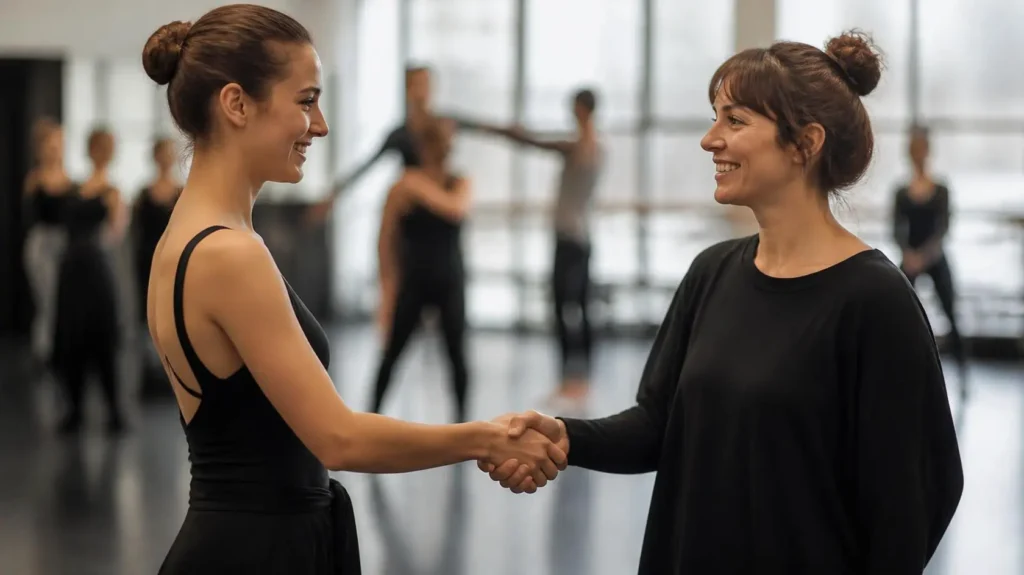
4. Be Someone People Want to Work With
Your reputation is your network’s currency:
- Be on time.
- Be prepared.
- Be positive under pressure.
- Be respectful to everyone, from headliners to assistants.
- Follow through on what you say.
5. Stay in Touch
Networking isn’t one conversation. Follow up after meeting people, comment on their work, congratulate them on wins, and check in occasionally, not only when you need something.
6. Use Social Media Professionally
Your online presence often serves as your first introduction. Keep your dance account clear and professional, and engage genuinely with the dancers and choreographers you admire. See how to build a personal brand as a dancer.
7. Collaborate
Make content, choreography or projects with other dancers, filmmakers and musicians. Collaborations grow your network and your portfolio at the same time.
Simple Conversation Starters
| Situation | What to say |
|---|---|
| After a class | “Thanks for the class, that combo really pushed me.” |
| At a jam | “Your round earlier was crazy. How long have you been training?” |
| Meeting a choreographer | “I took your workshop last month. Do you have classes coming up?” |
| Online | A specific comment on their work, not just an emoji |
Frequently Asked Questions
Why is networking important for dancers?
Many dance jobs are filled through recommendations and personal connections, often before they’re advertised.
How can dancers network without being pushy?
Show up consistently to classes and events, support other dancers, be reliable, and stay in touch genuinely.
Where do dancers network?
Classes, workshops, jams, battles, showcases, festivals and on social media.
How do I network as a shy dancer?
Let your consistency do the work. Keep showing up, and start with small, genuine compliments or questions.
Where to Start Today
Pick one class, jam or event to go to this week, and plan to speak to two people there.
Leave a Reply