
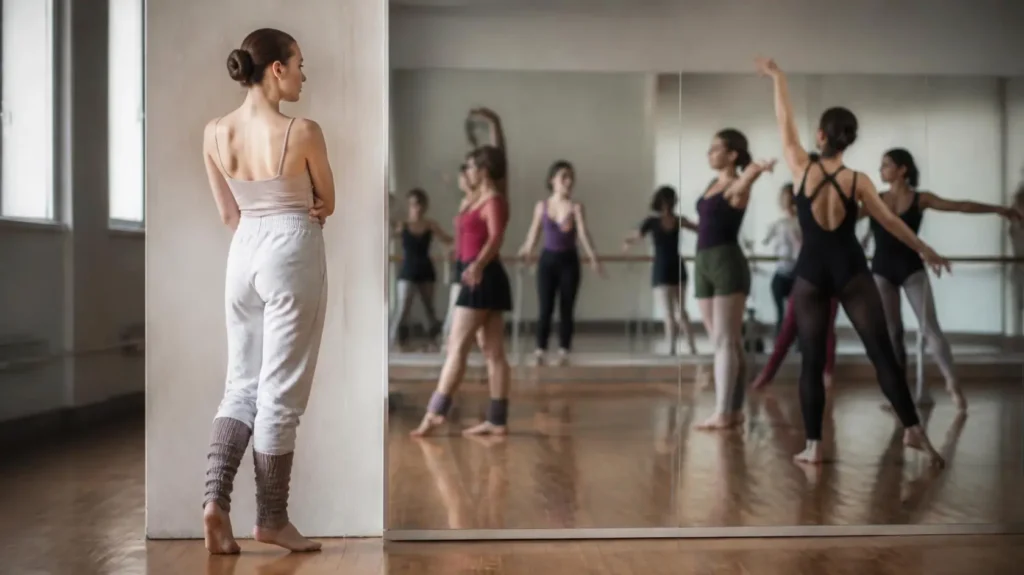
You open Instagram or TikTok and there it is: a dancer half your age doing moves you can’t do yet, a clip with millions of views, someone from your class booking a job you wanted. Suddenly your own progress feels tiny.
Comparing yourself to other dancers is one of the fastest ways to kill your confidence and motivation. It’s also completely natural. Here’s how to keep it from taking over.
Why Comparison Hurts So Much
- It’s unfair. You’re comparing your everyday practice to someone else’s best moment.
- It ignores context. You don’t know how many years they’ve trained, what resources they’ve had or what they’re struggling with.
- It shifts your focus from your own growth to someone else’s.
- It drains joy from something you love.
Social media makes it worse. Every feed is a highlight reel, edited, retaken and polished. Nobody posts their 47 failed attempts.
Comparison Can Be Useful, in the Right Form
Not all comparison is bad. Watching better dancers can show you what’s possible and give you ideas. The difference is how you compare:
| Harmful comparison | Healthy comparison |
|---|---|
| “I’ll never be as good as them.” | “What can I learn from how they do that?” |
| Focusing on their results | Studying their methods |
| Feeling smaller | Feeling inspired |
| Constant scrolling | Intentional study |
1. Compare Yourself to Your Past Self
The only fair comparison is between you now and you before. Keep a video archive and look back every few months. That’s real progress you can measure.
2. Turn Envy Into Curiosity
When you feel that sting of comparison, ask a different question: What exactly do I admire here, and how could I work towards it? That turns a negative feeling into a training goal.
3. Remember What You Don’t See
The dancer you’re comparing yourself to may have been training for ten years longer, had access to classes you didn’t, or be dealing with their own self-doubt. You’re seeing a tiny, curated slice of their story.
4. Curate Your Feed
If certain accounts consistently leave you feeling worse, mute them for a while. Fill your feed with dancers who inspire you, teach you or make you want to practice, not ones that make you want to quit.
5. Limit Scrolling Before Practice
Scrolling right before practice can leave you feeling discouraged before you’ve even started. Try putting your phone away for the first part of your session, or only open it to play music.
6. Define Your Own Success
What does success look like for you? Winning battles? Teaching? Dancing for artists? Enjoying a hobby? Growing an online page? When your goals are clear, other people’s paths matter less because they’re not your path.
7. Celebrate Other Dancers
It sounds backwards, but genuinely celebrating other dancers’ wins reduces comparison. It shifts your mindset from competition to community. And the dance world rewards people who lift others up.
8. Focus on Your Unique Strengths
You have qualities other dancers don’t: your personality, your musical taste, your background, your body. Lean into them. Read how to develop your own unique dance style.
Frequently Asked Questions
Why do I always compare myself to other dancers?
It’s human nature, made stronger by social media. Seeing highlight reels makes everyone else’s progress look faster than yours.
How do I stop feeling jealous of other dancers?
Turn jealousy into curiosity: figure out what you admire and how to work towards it. Celebrating others’ wins also helps.
Is it ever helpful to compare myself to others?
Yes, when you use it to learn and get inspired rather than to judge yourself.
How can I focus on my own dance journey?
Compare yourself to your past self, set personal goals, curate your social media and define your own version of success.
The Bottom Line
Comparing yourself to other dancers is natural, but it doesn’t have to control you. Compare yourself to your past self, turn envy into curiosity, curate your feed, define your own success and celebrate others. Their highlight reel isn’t your practice session. Your journey is the only one you need to run.
Leave a Reply