
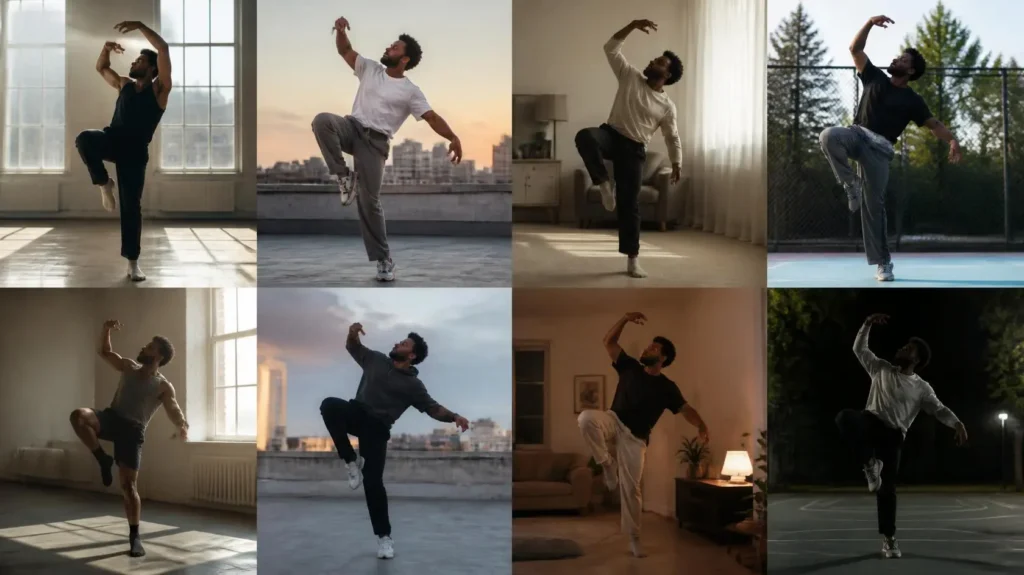
Quick answer: Yes, 20 to 30 minutes a day is enough to improve, and it usually works better than one long session a week. Your body learns movement through repetition spread over time, with sleep in between to lock it in. Daily short sessions give you more of both. Long sessions are still useful, but as an addition, not a replacement.
The Short Version
| Practice pattern | Weekly total | Typical result |
|---|---|---|
| 3 hours, once a week | 3 hours | Slow progress, lots of re-learning each week |
| 30 minutes, 6 days a week | 3 hours | Steadier progress, skills stick |
| 30 minutes daily + one 2-hour session | 5 hours | Best of both: consistency plus depth |
Same total hours, very different results.
Why Frequent Practice Works Better
Your brain learns movement between sessions
When you practice a move, your brain keeps processing it afterwards, especially during sleep. Practicing a little every day means more “learn, sleep, reinforce” cycles in a week than one big session.
You forget less
After a week off, you spend the first part of your next session getting back to where you were. Daily practice skips that re-learning phase.
Quality stays higher
In a three-hour session, the last hour is often tired and sloppy, and practicing sloppy movement builds sloppy habits. Short sessions keep your focus and quality high.
It’s easier to keep going
A 20-minute session is easy to fit into a busy day and easy to start. A three-hour session is easy to postpone. Consistency is simply more sustainable.
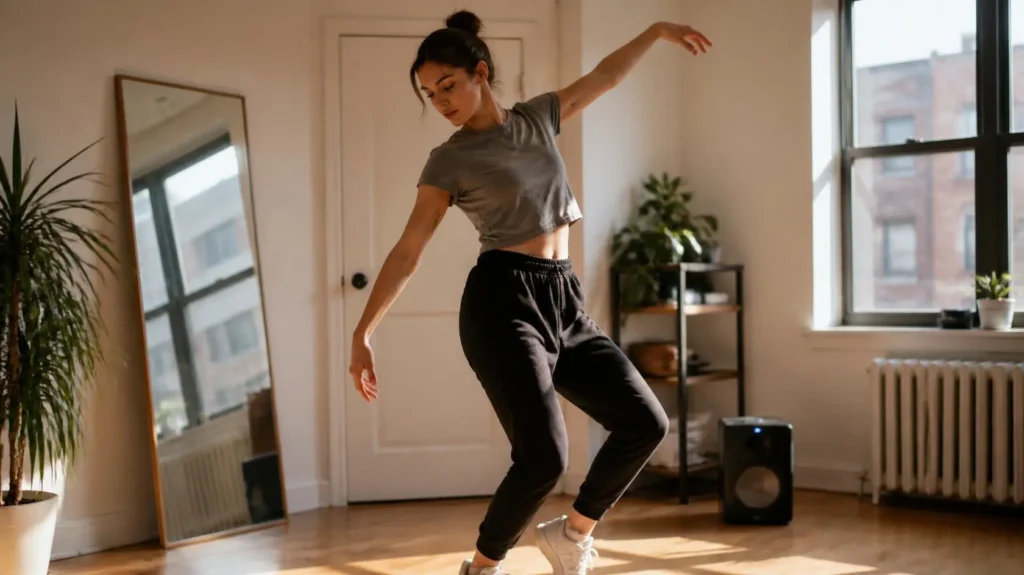
When Long Sessions Still Help
Long sessions aren’t bad. They’re great for:
- Learning and rehearsing full choreography.
- Building stamina for long performances or battles.
- Jams, cyphers and sessions with your crew.
- Deep work on a creative project.
The ideal is a base of short, consistent sessions, plus a longer session once or twice a week.
What a Consistent Week Can Look Like
If you have 20 minutes a day:
- 5 min warm-up
- 10 min one focus skill
- 5 min freestyle
If you have 30–45 minutes a day:
- Follow the structure in how to build dance practice habits and improve faster.
Plus, once or twice a week:
- A longer class, jam or crew session.
How to Actually Stay Consistent
- Same time daily, attached to something you already do.
- Have a 10-minute minimum for low-energy days.
- Plan tomorrow’s focus before you go to bed.
- Track your streak and don’t miss two days in a row.
- Keep one rest day a week.
Busy schedule? See how to balance dance training with school or work.
Frequently Asked Questions
Is 20 minutes of dance practice a day enough?
Yes. Focused 20-minute daily sessions lead to real progress, often more than occasional long sessions.
How often should I practice dance to improve?
Five or six days a week of short sessions, plus one rest day, works well for most dancers.
Is it better to practice dance every day or a few times a week?
Shorter daily practice usually beats fewer, longer sessions for skill learning, as long as you include rest.
Do long dance sessions still matter?
Yes, for choreography, stamina and crew sessions. Use them on top of a consistent daily base.
Where to Start Today
Set a 20-minute timer, pick one thing to work on and practice. Do the same tomorrow. In a month, you’ll have more than 10 hours of focused practice in, without ever having a “long session.”
Leave a Reply