
Quick answer: Stop relying on how you feel. Pick a fixed time, make the minimum session tiny (10 minutes counts), and decide what you’ll practice before you start. Discipline isn’t willpower. It’s removing the decisions that give you a chance to skip.
Sound Familiar?
- You plan to practice “later” and later never comes.
- You train hard for a week, then nothing for three.
- You get to the floor and waste 20 minutes deciding what to do.
- You only practice when you feel inspired.
None of this means you’re lazy. It means you’re running on motivation, and motivation is unreliable for everyone.
Why Motivation Isn’t Enough
Motivation spikes after a great battle, a viral clip or an inspiring class. Then it fades. If your practice depends on it, your practice fades too.
Disciplined dancers aren’t more motivated. They’ve built systems that work even when they aren’t.
1. Practice at the Same Time Every Day
A fixed time turns practice into a routine instead of a daily decision. Tie it to something that already happens: after school, after dinner, before your first coffee.
When the time comes, you don’t ask “do I feel like it?” You just start.
2. Make the Minimum Ridiculously Small
On bad days, commit to just 10 minutes. Put on one song and drill one thing. Most days, once you start, you’ll keep going. On days you don’t, 10 minutes still beats zero, and it keeps the habit alive.
This is the most effective trick for dancers who keep skipping. The hardest part is starting.
3. Decide What You’ll Practice Before You Start
Wasted sessions often come from not knowing what to work on. Plan the night before, or keep a short list on your phone:
- One foundation to drill.
- One combo to clean.
- One song to freestyle to.
Walk in, pick from the list, go.
4. Remove Friction
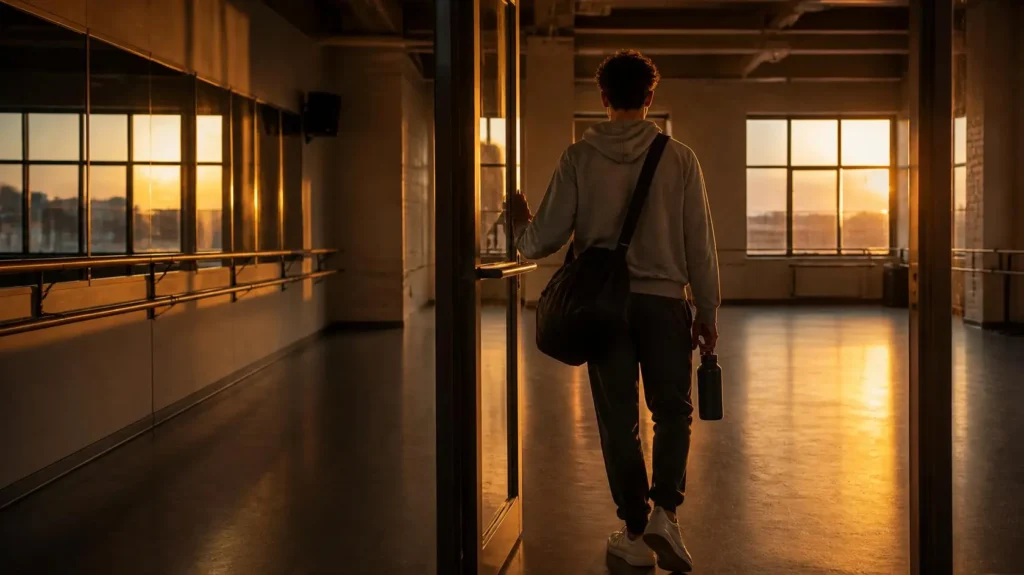
Make starting as easy as possible:
- Keep your practice space clear.
- Have your shoes and clothes ready.
- Save a practice playlist so you don’t scroll for music.
- Put your phone on do-not-disturb (or out of reach) except for music.
Every small obstacle is an excuse waiting to happen.
5. Track Your Streak
Mark every day you practice on a calendar or in an app. Seeing a chain of days builds momentum, and you won’t want to break it. If you miss a day, don’t miss two.
6. Give Yourself Deadlines
Discipline is easier with something coming up. Sign up for a battle, a showcase, a class performance, or set a goal to post a clip by a certain date. A deadline gives every session a purpose.
7. Train With Others When You Can
It’s much harder to skip when your crew is expecting you. Set regular sessions with friends, or join a class with a fixed schedule.
What to Do When You Fall Off
You will miss days, maybe weeks. Everyone does. What matters is how fast you come back:
- Don’t try to “make up” lost time with a huge session.
- Restart with your 10-minute minimum tomorrow.
- Ask what caused the break (schedule, burnout, boredom) and fix that.
If you’re constantly exhausted, the problem may be rest, not discipline. See why rest and recovery are important for dancers.
Discipline Checklist
| System | Done? |
|---|---|
| Fixed daily practice time | |
| 10-minute minimum on bad days | |
| Practice plan decided in advance | |
| Space, clothes and playlist ready | |
| Streak tracker | |
| An upcoming deadline | |
| At least one session a week with others |
Frequently Asked Questions
How do I make myself practice dance when I don’t feel like it?
Commit to just 10 minutes at a fixed time, with your plan decided in advance. Starting is the hardest part; you’ll often keep going.
How do dancers stay disciplined?
They rely on routines, plans and deadlines rather than motivation, and they come back quickly after missed days.
Is it okay to skip dance practice sometimes?
Yes. Rest is necessary, and occasional missed days are normal. The goal is not missing two in a row without a reason.
How many days a week should I practice?
Most dancers improve well with short sessions five or six days a week, plus at least one rest day.
Where to Start Today
Pick your fixed time and write tomorrow’s 10-minute plan right now. That’s it. Discipline starts with one session you didn’t negotiate with yourself.
Leave a Reply