
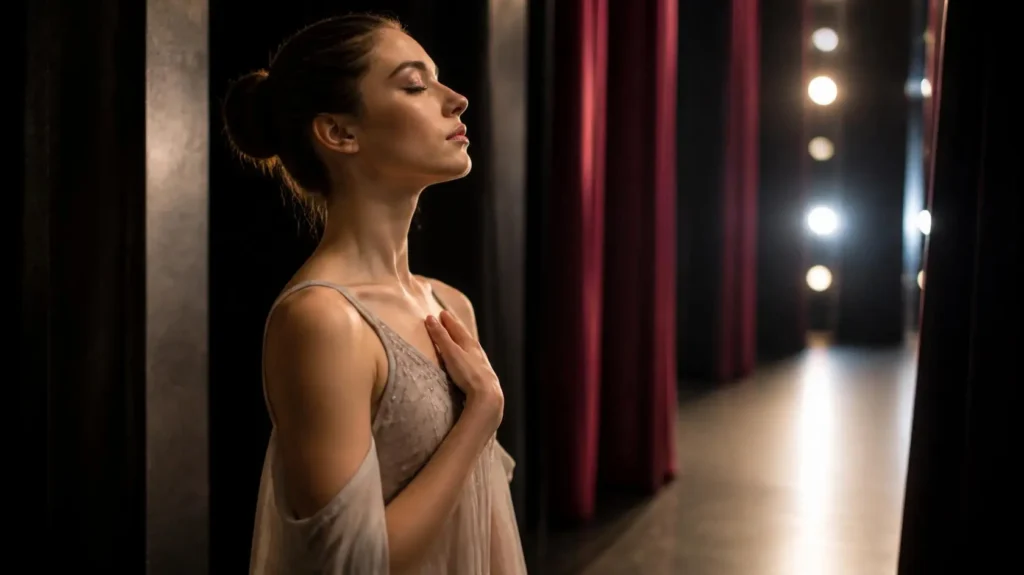
Racing heart. Shaky legs. A blank mind right when you need to remember the choreography. Dance performance anxiety, often called stage fright, affects beginners and professionals alike. Even dancers who’ve performed hundreds of times still feel nerves before stepping out.
The goal isn’t to make nerves disappear completely. It’s to manage them so they don’t take over. This article covers the mindset side of performance anxiety. (For quick, practical ways to stay physically relaxed while dancing, see how to stay relaxed during a dance performance.)
Why Performance Anxiety Happens
When you’re about to be watched and judged, your brain treats it like a threat. It triggers your stress response: more adrenaline, a faster heartbeat, quicker breathing. That’s your body trying to help you, but it can feel overwhelming.
Common thoughts that fuel it:
- “What if I forget the choreography?”
- “What if I fall or mess up?”
- “What if people think I’m bad?”
- “What if I lose in front of everyone?”
Reframe Nerves as Energy
Physically, nervousness and excitement feel very similar: racing heart, adrenaline, alertness. The difference is mostly how you interpret them.
Instead of telling yourself “I’m so nervous,” try “I’m ready” or “My body is getting ready to perform.” Many performers find that relabeling nerves as excitement helps them use that energy instead of fighting it.
Before the Performance
1. Prepare Thoroughly
The more automatic your material, the less room there is for “what if I forget?” Rehearse choreography until you could do it half asleep. For battles, practice freestyling to unfamiliar music regularly.
2. Practice Performing, Not Just Dancing
Perform for friends, family, your crew, or your phone camera. Recreate pressure in practice, so the real thing feels more familiar.
3. Visualize Success
Close your eyes and run through the performance in your mind: walking out, the music starting, hitting your moves, finishing strong. Imagine handling a small mistake calmly too. Visualization is used by athletes and performers to build familiarity and confidence.
4. Build a Pre-Performance Routine
A consistent routine gives you something familiar to focus on: your warm-up, a specific playlist, breathing exercises, a final mental run-through. Routines signal to your brain that you’re in control.
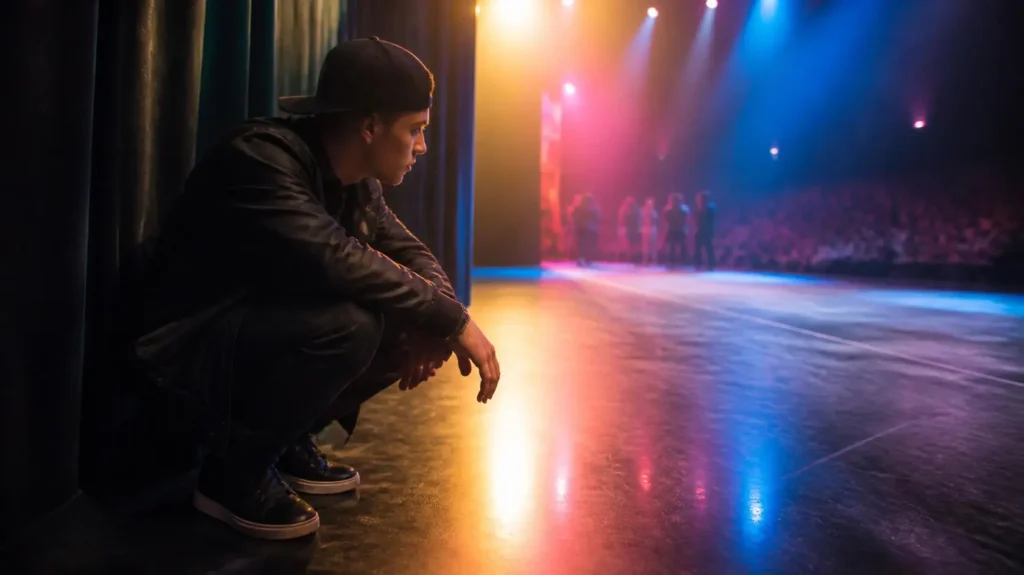
Right Before You Go On
5. Breathe Slowly
Long, slow exhales help calm your body. Breathe in for 4 counts, out for 6 to 8 counts, and repeat several times.
6. Focus on What You Can Control
You can’t control the audience, the judges or your opponent. You can control your preparation, your breathing, your focus and your effort. Put your attention there.
7. Shift Your Focus to the Music
Once the music starts, focus on what you hear rather than what people might think. The music is your anchor.
After the Performance
8. Reflect Kindly
Afterwards, note what went well and one or two things to improve. Avoid harsh self-criticism. If something went wrong, read how to recover mentally from a bad dance performance.
9. Keep Performing
Anxiety usually eases with exposure. The more you perform, at jams, showcases, small battles or class performances, the more familiar it becomes.
When to Get Extra Support
If performance anxiety is severe, such as panic attacks, avoiding performing entirely, or anxiety that affects your daily life, consider talking to a doctor, counselor or sports or performance psychologist. They can offer strategies tailored to you.
Frequently Asked Questions
How do I stop being nervous before a dance performance?
Prepare thoroughly, practice performing for others, use a pre-performance routine, breathe slowly and reframe nerves as energy.
Is stage fright normal for dancers?
Yes. Most dancers, including professionals, feel nervous before performing.
How do I deal with nerves before a dance battle?
Freestyle to unfamiliar music regularly, warm up and stay loose before your round, focus on the music and remind yourself that nerves mean you care.
Does performance anxiety go away?
It often decreases with experience and regular performing, though some nerves usually remain and can actually help.
The Bottom Line
Dance performance anxiety is normal, and manageable. Prepare deeply, practice under pressure, visualize success, build a routine, breathe slowly and treat nerves as energy. Keep performing, and those nerves will gradually turn from something that holds you back into something that powers you.
Leave a Reply