
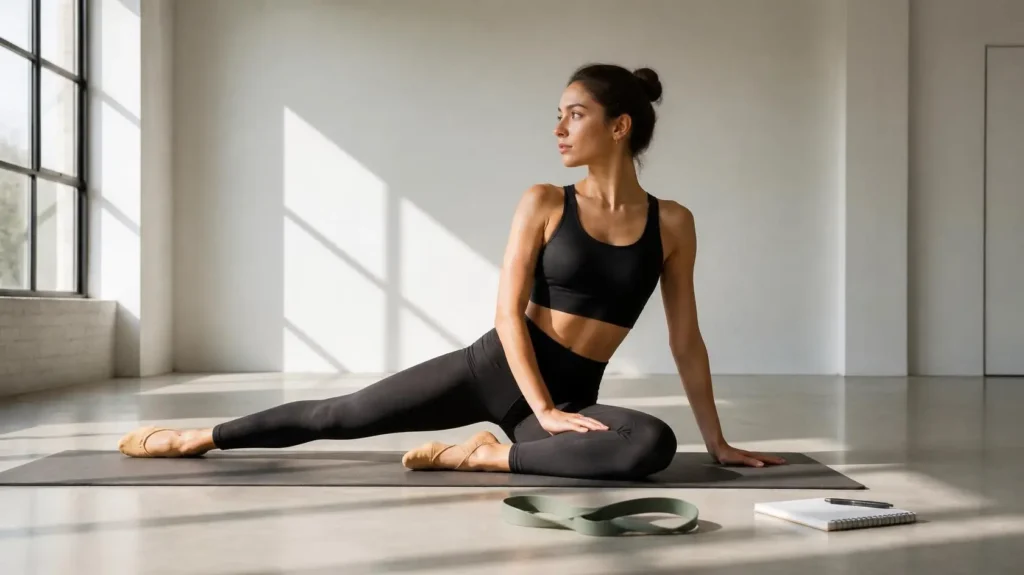
Quick answer: Improvement comes from how you practice, not just how long. Give every session one clear goal, split it into warm-up, focused drilling and freestyle, film at least once a week, and review what you learned at the end. Repeat the same structure until it’s automatic. That’s a practice habit.
(Want to know what top dancers do differently? See 10 habits successful dancers have in common. This article is the how-to.)
Why You Might Be Practicing a Lot but Improving Slowly
Common reasons:
- No clear goal. You “dance around” without working on anything specific.
- Only practicing what you’re good at. It feels good but doesn’t fix weaknesses.
- No feedback. Without filming or coaching, you repeat mistakes.
- All-or-nothing sessions. Huge sessions once in a while, nothing in between.
Step 1: Use a Simple Session Structure
Use the same structure for every practice so you never waste time deciding what to do:
| Block | Time (45-min session) | Purpose |
|---|---|---|
| Warm-up | 5–8 min | Prepare your body |
| Focus drill | 15–20 min | Work on your one goal for today |
| Apply it | 10 min | Use the skill in combos or freestyle |
| Free dance | 5–10 min | Fun, flow, creativity |
| Review | 2 min | Note what improved and what’s next |
Short on time? Scale it down. Even 20 minutes works with the same structure.
Step 2: Give Every Session One Goal
Not “get better.” One specific target:
- “Clean the second eight of the routine.”
- “Five clean double turns on my left side.”
- “Hit the snare with my chest for a whole song.”
- “Hold a freeze for three seconds.”
One goal keeps you focused and makes progress visible.
Step 3: Spend Time on Your Weaknesses
The fastest improvements come from your weakest areas. Spend at least a third of your focus time on something you’re bad at or avoid: your weak side, a style you’re uncomfortable with, musicality if you’re a technical dancer, or technique if you’re a groove dancer.
Step 4: Practice Slow, Then Fast
Learning a move slowly and correctly, then speeding it up, builds cleaner habits than practicing fast and sloppy. Speed is the last thing to add.
Step 5: Get Feedback Every Week
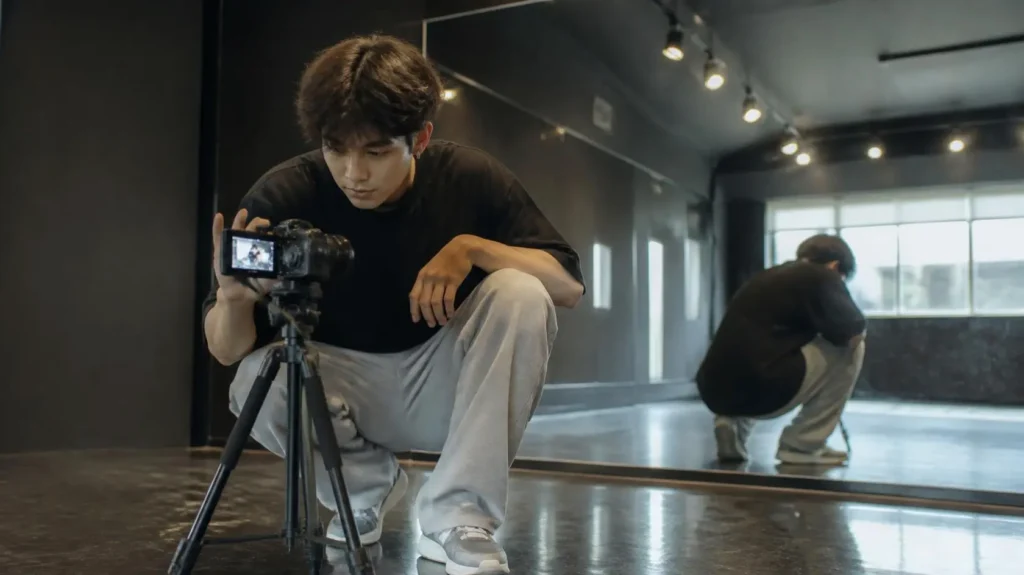
- Film yourself at least once a week and review it for one thing.
- Ask a teacher or friend for one correction.
- Take a class regularly, even if you mostly practice alone.
Step 6: Plan Your Week, Not Just Your Session
A balanced week covers more ground:
| Day | Focus |
|---|---|
| Mon | Foundations and technique |
| Tue | Choreography or combos |
| Wed | Strength or conditioning |
| Thu | Musicality and freestyle |
| Fri | Weak areas |
| Sat | Jam, class or long session |
| Sun | Rest |
Step 7: Make the Habit Stick
- Same time, same place whenever possible.
- Start small: 20 minutes a day is enough to build the habit.
- Track your sessions so you can see the streak.
- Never miss twice. If you skip a day, make sure tomorrow happens.
For more on staying consistent, read how to stay disciplined with dance practice and why consistent dance practice beats long sessions.
Frequently Asked Questions
How should I structure my dance practice?
Warm up, spend most of the session drilling one specific goal, apply it in combos or freestyle, finish with free dancing and a quick review.
How can I improve at dance faster?
Practice with one clear goal per session, work on weaknesses, learn slowly before speeding up, and get feedback weekly through filming or coaching.
How long should a dance practice session be?
Anywhere from 20 to 90 minutes. Focus and consistency matter more than length.
How long does it take to form a practice habit?
Usually several weeks of consistent repetition. Keeping sessions short at first makes it easier.
Where to Start Today
Before your next session, write down one goal and use the five-block structure. That’s the habit, starting now.
Leave a Reply