
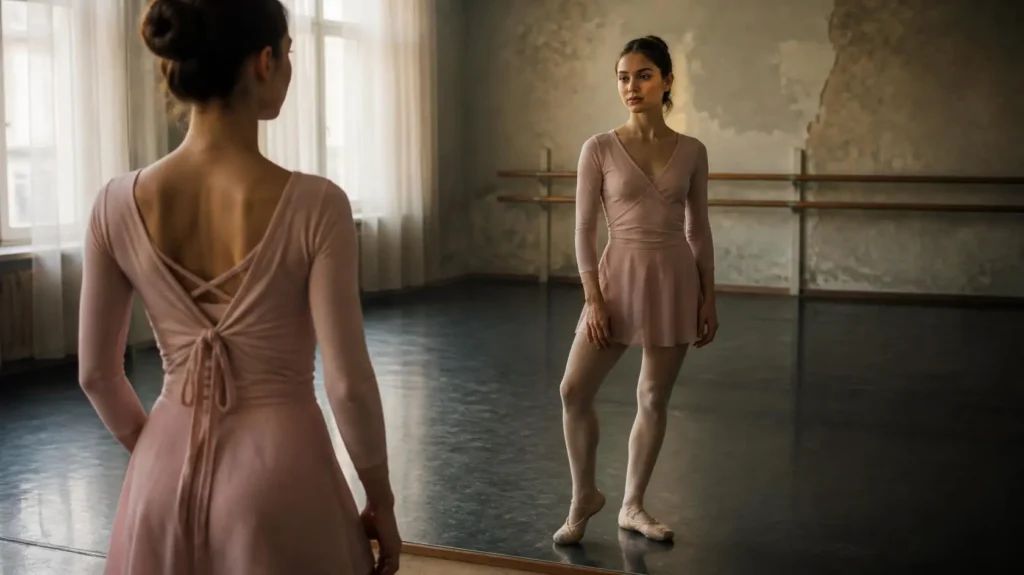
Quick answer: Self-doubt doesn’t go away by waiting until you feel good enough. It shrinks when you collect proof (old clips, wins, finished goals), question the harsh thoughts instead of believing them, and keep showing up while the doubt is still there. Almost every dancer you admire has felt exactly what you’re feeling.
What Self-Doubt Sounds Like
- “I’m not a real dancer.”
- “Everyone in this class is better than me.”
- “I don’t belong at this jam.”
- “If I enter that battle, I’ll embarrass myself.”
- “I started too late.”
These thoughts feel like facts. They’re not. They’re feelings, and feelings can be wrong.
Why It Happens
Self-doubt is common in dance because:
- You’re constantly being watched in class, at jams and online.
- Progress is hard to see from day to day.
- Social media shows everyone’s best clips, not their struggles.
- You care, and people doubt themselves most in things that matter to them.
Feeling like an imposter often means you’re in a room that’s stretching you. That’s where growth happens.
1. Collect Evidence Against the Doubt
Your doubt says you’re not improving. Prove it wrong:
- Keep a folder of practice clips and compare old to new.
- Write down every small win.
- List things you can do now that you couldn’t a year ago.
When doubt shows up, read the evidence.
2. Question the Thought
When a harsh thought appears, ask:
| Question | Example |
|---|---|
| Is this definitely true? | “Is everyone better, or just a few people?” |
| What would I tell a friend? | “You’ve only been dancing a year, that’s normal.” |
| What’s a more accurate version? | “I’m newer than most here, and I’m learning fast.” |
You don’t need to replace doubt with blind positivity. Just replace it with something more accurate.

3. Define “Real Dancer” for Yourself
There’s no test you have to pass to be a dancer. If you dance and you’re working to get better, you’re a dancer. Hobbyist, battle dancer, teacher, content creator: all real. Define what success looks like for you, not for someone else.
4. Act Before You Feel Ready
Confidence usually follows action, not the other way around. Enter the circle, take the class, post the clip, even with doubt in your head. Each time you act and survive, the doubt gets a little quieter. See daily confidence-building habits for dancers.
5. Limit the Comparison Triggers
If certain accounts, or scrolling before practice, consistently feed your doubt, cut back. Read how to stop comparing yourself to other dancers.
6. Surround Yourself With Supportive Dancers
Find a crew, class or community where people encourage each other. Being around dancers who hype you up, and who you hype up in return, makes self-doubt much harder to sustain.
7. Talk About It
Ask a dancer you respect whether they’ve ever doubted themselves. The answer is almost always yes. Hearing it from someone you admire takes away a lot of its power.
When Self-Doubt Becomes Something More
Some doubt is normal. If it becomes constant, affects your mood most days, or spills into the rest of your life, it’s worth talking to someone you trust: a teacher, friend, family member or counselor.
Frequently Asked Questions
Is it normal to doubt yourself as a dancer?
Very. Most dancers, including professionals, experience self-doubt, especially when they’re being challenged.
How do I stop feeling like I’m not good enough at dancing?
Collect evidence of your progress, question harsh thoughts, define success for yourself and keep showing up while the doubt is there.
What is imposter syndrome in dance?
Feeling like you don’t belong or will be “found out”, even when you’ve earned your place. It’s common in dancers stepping into new levels.
Can I become a dancer if I started late?
Yes. Many dancers start in their late teens, twenties or later and become skilled.
Where to Start Today
Find your oldest dance clip and your newest one. Watch them back to back. That gap is your first piece of evidence.
Leave a Reply