
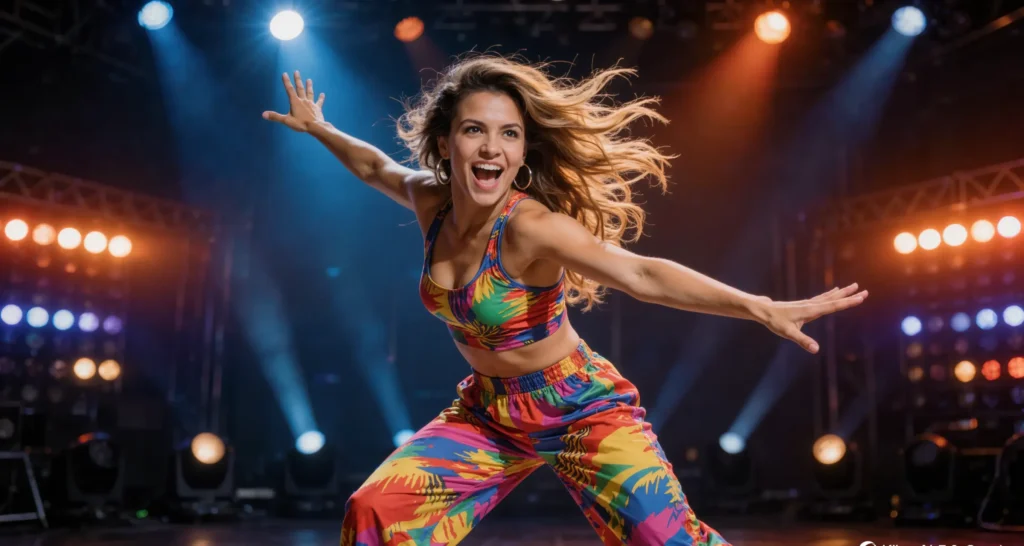
Some dancers walk into a room and the temperature changes. The crowd gets louder, other dancers start hyping, and suddenly everyone is locked in. That’s energy. It’s not just how hard you move; it’s how much life you put out into the space and how well you share it with the people watching.
Using energy in dance well means knowing how to build it, project it and spend it at the right moments. Here’s how.
Energy Isn’t the Same as Effort
Many dancers think more energy means moving harder all the time. But dancing at maximum effort from start to finish is exhausting to do and exhausting to watch. With no variation, nothing stands out.
Real energy is about projection and management:
- Projection is sending your energy outward so the audience feels it.
- Management is pacing it so it builds, peaks and lands where it matters.
1. Project Beyond Your Body
Energy that stays inside your body doesn’t reach anyone. Imagine your movement and focus extending past your fingertips, past the edge of the stage, to the farthest person in the room.
Drill: back-row focus. Perform a combo while imagining a friend sitting at the very back of a big room. Dance so they can feel it. Then perform it again for someone sitting a meter away. Notice the difference in how big your energy feels, and use the back-row version on stage.
2. Build Energy Through a Performance
Strong performances have a shape: they start with presence, build momentum and hit a peak. Plan where your peak moments are, like a big drop in the music or your hardest move in a battle round, and save some energy so they hit harder.
| Stage of a performance | Energy level |
|---|---|
| Entrance | Calm, focused, confident |
| Opening | Steady, establishing the groove |
| Build | Gradually increasing intensity |
| Peak | Full energy, biggest moments |
| Finish | Strong, clean ending |
3. Use Contrast
Energy feels bigger when it’s surrounded by stillness or calm. A sudden explosion after a slow section hits much harder than one more fast move in a fast routine. Plan moments of low energy so your high-energy moments land with impact.
4. Match the Music’s Energy
Different songs carry different energy levels. A hard-hitting track calls for aggressive, grounded energy. A light, bouncy one calls for playful, buoyant energy. Listen first and let the song tell you what kind of energy it wants.
5. Feed Off the Room
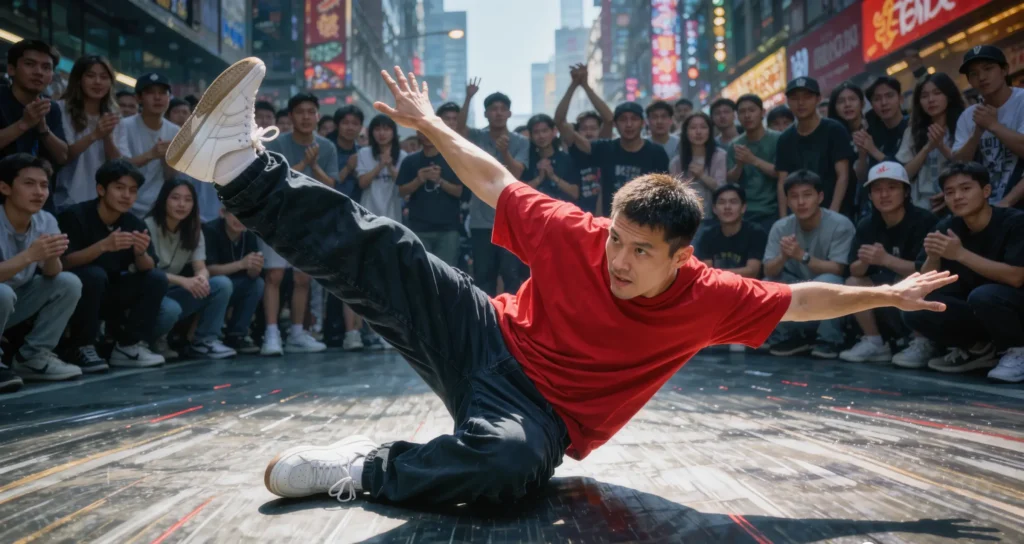
In battles and live shows, energy is a two-way exchange. When the crowd reacts, use it. Let a cheer push you into your next move. When the room is quiet, it’s your job to raise it.
Interacting helps: a look at the crowd, a gesture to the DJ, a reaction to your opponent. These moments share energy outward and bring it back to you. For more on connecting with an audience, see how to improve your stage presence as a dancer.
6. Get Your Face Involved
Energy shows in your face just as much as your body. A blank face with powerful movement sends mixed signals. Let your expression carry the same intensity as your body. Read how to use facial expressions in dance.
7. Build the Stamina to Back It Up
Energy fades if your body can’t sustain it. Many dancers start strong and fade halfway through because they run out of gas. Conditioning lets you stay powerful from first count to last. See how to build dance stamina for longer performances.
Common Energy Mistakes
- Going 100 percent from the first count and fading by the end.
- Keeping all energy inside instead of projecting it.
- Same energy level throughout, with no build or peak.
- Ignoring the crowd’s reactions.
- High-energy body with a blank face.
Frequently Asked Questions
How can I bring more energy when I dance?
Project your movement and focus to the back of the room, match the music’s energy, use contrast, involve your face and interact with your audience.
Why do I look low-energy when I dance?
Often your energy stays inside your body, or you’re holding back. Practicing performing for the “back row” makes a big difference.
How do I keep energy up during a long routine?
Pace yourself with a build and peak instead of going all out from the start, and train your stamina so your body can sustain it.
How do dancers use energy in battles?
They feed off the crowd, react to the music and their opponent, and save their biggest energy for key moments in the round.
The Bottom Line
Energy in dance isn’t about moving as hard as possible. It’s about projecting your movement outward, pacing it so it builds to a peak, using contrast and sharing it with the people watching. Learn to control and release your energy, and your dancing will feel more powerful to everyone in the room.
Leave a Reply