
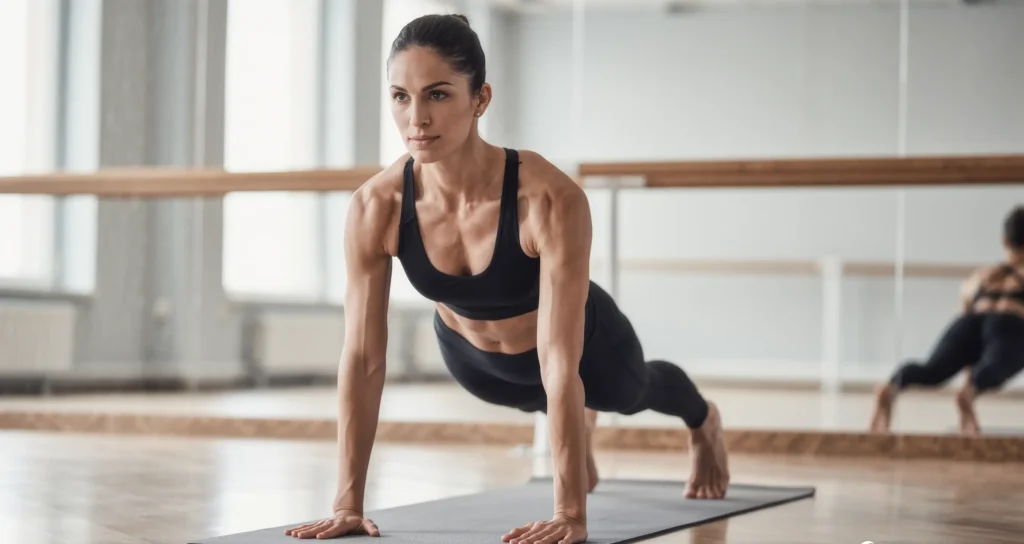
Your core is the control center of almost every move you make. It keeps you balanced in turns, holds you steady in freezes, transfers power from your legs to your upper body and protects your lower back. If you’ve ever fallen out of a turn, wobbled in a balance or felt your back ache after training, a weak core is a likely cause.
The good news is that the right core exercises for dancers don’t need a gym. Here are the best ones, plus a routine you can do at home.
What “Core” Really Means
Your core isn’t just your six-pack. It includes:
- Rectus abdominis: the front “abs.”
- Transverse abdominis: a deep muscle that wraps around your middle like a belt.
- Obliques: the muscles along your sides, which control twisting and side bending.
- Lower back muscles that support your spine.
- Glutes and hip muscles, which work closely with the core.
Dancers need all of these working together. Crunches alone won’t do it. You need exercises that train your core to stabilize while your arms and legs move, because that’s what happens when you dance.
Why Core Strength Matters in Dance
- Turns: a strong core keeps your body rotating as one unit.
- Balance: it holds your torso steady over your base.
- Freezes and floorwork: essential for breaking, where your core holds your whole body in position.
- Power: it transfers force from your legs to your upper body for jumps and big movements.
- Injury prevention: it supports your lower back during bends, drops and landings.
The Best Core Exercises for Dancers
1. Dead Bug
Lie on your back with arms pointing to the ceiling and knees bent at 90 degrees. Slowly lower your opposite arm and leg towards the floor while keeping your lower back pressed down. Return and switch sides.
Why it helps: trains your core to stay stable while your limbs move, exactly what dancing requires.
2. Plank
Hold a straight line from head to heels on your forearms and toes. Don’t let your hips sag or pike up.
Why it helps: builds overall core endurance and stability.
3. Side Plank
Lie on your side and lift your hips so your body forms a straight line, supported on one forearm.
Why it helps: strengthens obliques for side-to-side control and balance.
4. Hollow Body Hold
Lie on your back, press your lower back into the floor, and lift your shoulders and legs slightly off the ground, arms reaching overhead. Hold.
Why it helps: a gymnastics favorite that builds the tight, connected core needed for freezes, jumps and power moves.
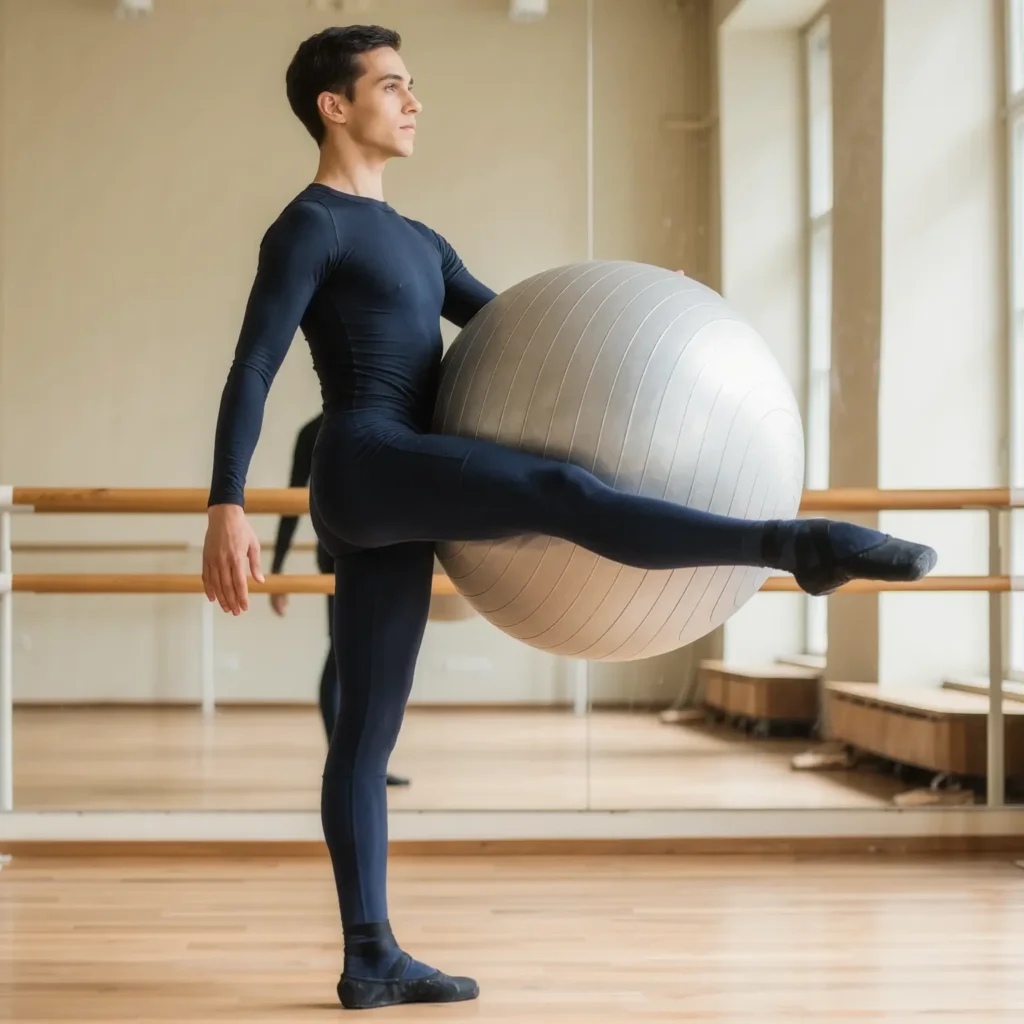
5. Bird Dog
On hands and knees, extend one arm forward and the opposite leg back. Hold for two seconds without letting your hips rotate. Switch sides.
Why it helps: builds balance and back strength while training cross-body control.
6. Russian Twist (Controlled)
Sit with knees bent, lean back slightly with a straight spine, and rotate your torso side to side. Move slowly and with control.
Why it helps: builds rotational strength for turns and spins.
7. Leg Raises
Lie on your back and slowly lift straight legs up, then lower them without letting your lower back arch off the floor.
Why it helps: strengthens the lower abs that support leg lifts and extensions.
A 15-Minute Core Workout for Dancers
Do this two or three times a week. Rest 15 to 20 seconds between exercises and repeat the circuit two or three times.
| Exercise | Reps / Time |
|---|---|
| Dead bug | 10 each side |
| Plank | 30–45 seconds |
| Side plank | 20–30 seconds each side |
| Hollow body hold | 20–30 seconds |
| Bird dog | 8 each side |
| Russian twist | 10 each side |
| Leg raises | 10 |
Focus on quality over speed. A slow, controlled rep is worth far more than a fast, sloppy one. For a full-body routine, add bodyweight exercises for dancers or strength training for dancers.
Tips for Better Core Training
- Breathe. Don’t hold your breath. Exhale on the hardest part of each movement.
- Keep your lower back supported in floor exercises.
- Train all sides: front, sides and back, not just abs.
- Connect it to dance. Practice engaging your core during turns and balances, not just in workouts.
Frequently Asked Questions
What are the best core exercises for dancers?
Dead bugs, planks, side planks, hollow body holds, bird dogs, controlled Russian twists and leg raises are some of the most effective because they train stability, not just strength.
How often should dancers train their core?
Two or three dedicated core sessions a week is a good target, alongside regular dance practice.
Do crunches help dancers?
They can, but they mainly train one muscle. Dancers benefit more from exercises that build stability and control across the whole core.
Will a stronger core improve my turns?
Yes. A strong core keeps your torso and hips rotating together on one axis, which makes turns cleaner and more controlled.
The Bottom Line
The best core exercises for dancers train stability while your arms and legs move, because that’s what dancing demands. Build a routine around dead bugs, planks, side planks, hollow holds and bird dogs, train two or three times a week, and focus on control. Your turns, balance, freezes and power will all benefit.
Leave a Reply