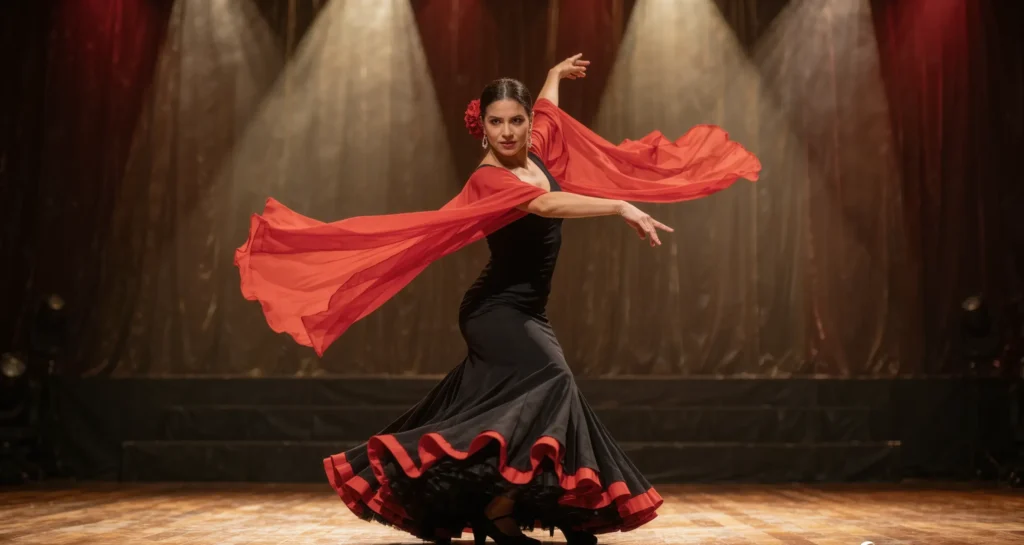
Most beginners pour all their attention into their feet. The arms get whatever is left over, which usually means they either flap around loosely or stay glued to the body. Yet arms are often the first thing an audience sees. Strong, intentional dance arm movements can make simple footwork look polished, while careless arms can make advanced footwork look unfinished.
Here’s how to make your arms work for you.
Why Arms Matter So Much
Your arms do three big jobs in dance:
- They finish the line. A step isn’t complete until the arms complete the shape.
- They express the music. Arms are one of the easiest ways to show texture, from smooth waves to sharp hits.
- They help you move. Arms add momentum to turns and jumps and help you balance.
Ballet even has a name for arm technique: port de bras, meaning “carriage of the arms.” Street styles have their own versions: waves, tuts, hits and the arm placements in toprock and grooves.
1. Know Where Your Arms Start and Finish
The biggest difference between messy and clean arms is intention. Every arm movement should have a clear starting point and a clear end point.
When learning any move, run it once focusing only on your arms. Where are they at count 1? Where do they finish? What path do they travel? Once you’ve defined those points, your arms stop drifting and start looking deliberate.
2. Move From Your Back, Not Just Your Hands
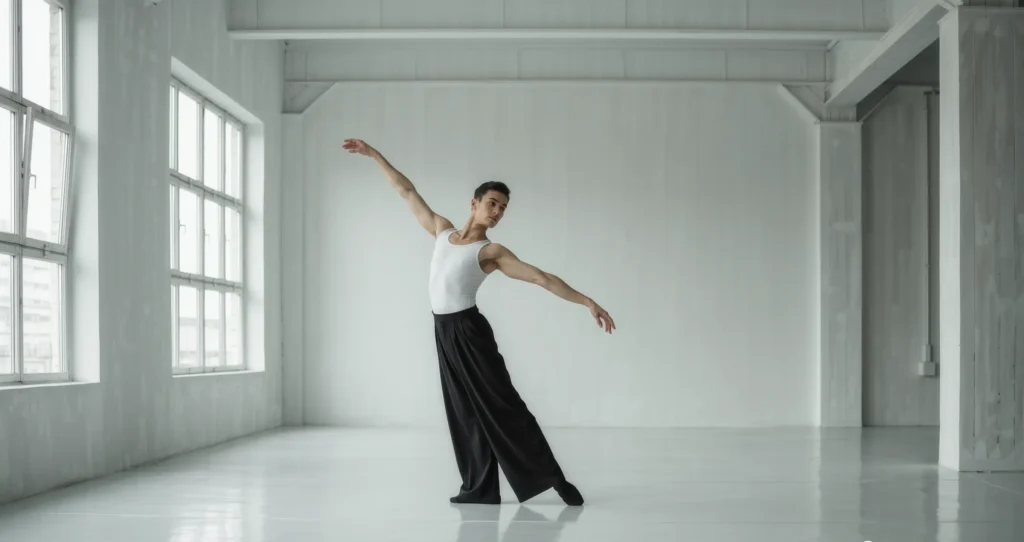
Strong arm movements start from your upper back and shoulder blades, not your wrists. When you initiate from your back, your arms look longer, more connected and more powerful.
Try this: reach one arm out to the side, first by just lifting your hand, then by feeling the movement start between your shoulder blades and flow out through your fingertips. The second version looks bigger and more controlled.
3. Keep Your Shoulders Down
Raised, tense shoulders shorten your neck and make arm movements look stiff. Before practicing, roll your shoulders back and let them drop. Throughout your session, check whether they’ve crept up, especially during fast or difficult sections.
4. Finish Through Your Fingers
Hands are the final punctuation of an arm line. Limp or clawed hands undo all the work of a good arm movement.
Decide what your hands are doing: open and extended, a flat palm, a fist, a relaxed natural shape. Whatever it is, make it deliberate. For more on extending through your limbs, see how to get cleaner dance lines and better extension.
5. Match Arm Dynamics to the Music
Arms are your most flexible tool for musicality. Use them to show what you hear:
| Music sound | Arm movement idea |
|---|---|
| Sharp snare or clap | Quick hit, then stop dead |
| Smooth vocal or synth | Slow, flowing waves |
| Rolling hi-hats | Small, quick isolations |
| Heavy bass drop | Big, powerful reach or push |
| Silence or pause | Freeze or slow suspension |
Practicing this way makes your arms feel connected to the song instead of decorative.
6. Train Arm Isolations
Isolation drills give you finer control over each part of your arm.
- Shoulder rolls and lifts: forward, back, up and down.
- Elbow circles: keep your shoulder still while your forearm circles.
- Wrist rolls: small, controlled circles in both directions.
- Arm waves: let a wave travel from your fingertips through the wrist, elbow and shoulder, then back.
Do one or two minutes of each as part of your warm-up.
7. Build Arm Endurance
Holding arms up during long routines is surprisingly tiring, and tired arms drop. Simple exercises help:
- Arm holds: hold arms out to the side at shoulder height for 30 to 60 seconds.
- Small arm circles: 30 seconds forward, 30 seconds back.
- Push-ups and band exercises for overall upper-body strength.
Common Arm Mistakes
- Letting arms hang or flap without purpose.
- Lifting the shoulders.
- Bending elbows when the line should be straight.
- Limp or clawed hands.
- Moving arms off the beat while the feet are on it.
Frequently Asked Questions
How can I improve my arm movements in dance?
Define a clear start and end point for every arm movement, initiate from your back, keep your shoulders down, finish through your fingers and match your arm dynamics to the music.
Why do my arms look awkward when I dance?
Usually because they lack intention. When you haven’t decided what your arms should do, they either freeze or flap. Practicing arms separately fixes this.
What is port de bras?
It’s the ballet term for arm movements and carriage. Its principles of connected, controlled arms are useful in every style.
Should I learn arms or footwork first?
Learn the footwork first so you know where you’re going, then add the arms as a separate layer.
The Bottom Line
Strong dance arm movements are intentional, connected and musical. Know where each movement begins and ends, move from your back, keep your shoulders relaxed and finish through your fingertips. Train your arms as seriously as your feet and your whole performance will look sharper and more complete.
Leave a Reply