
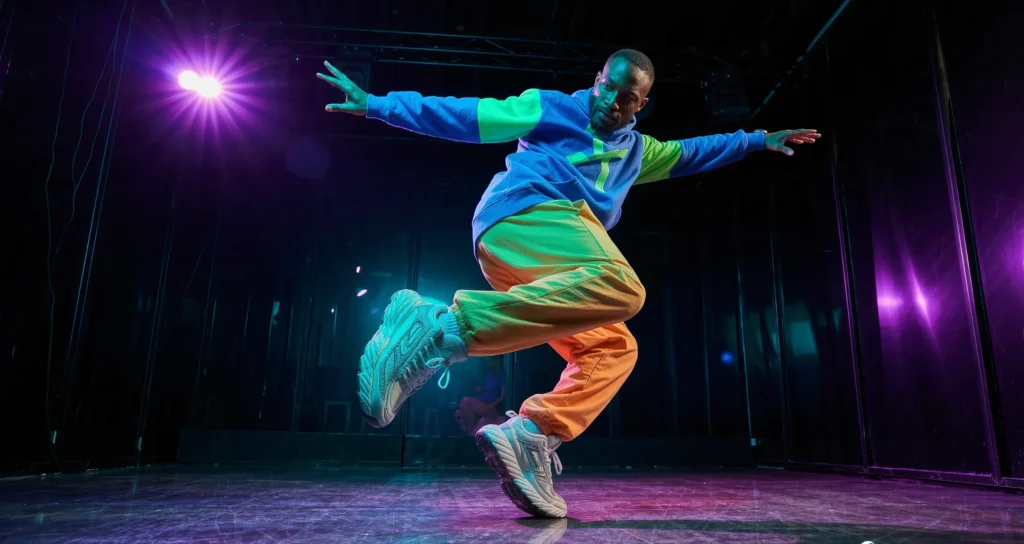
Footwork is where a lot of dancers get exposed. In a battle, fast and clean feet grab attention instantly. Sloppy feet, on the other hand, make even great upper-body movement look unfinished. Whether you dance hip-hop, house, breaking, tap or salsa, learning to improve dance footwork will level up everything else you do.
Here are seven practical ways to get quicker, cleaner and more controlled feet.
1. Slow It Down Before You Speed It Up
This is the golden rule of footwork. If you can’t do a pattern cleanly at half speed, doing it faster just hides the mistakes.
Break any new footwork into individual steps. Practice each step slowly, then link two together, then three. Only increase the tempo when the slow version is automatic. Many dancers find a metronome app helpful: start around 70 to 80 BPM and move up in small jumps.
2. Stay on the Balls of Your Feet
Fast footwork needs you to stay light. When your weight sinks into your heels, you slow down and your steps get heavy.
Keep your weight mostly on the balls of your feet with your knees soft. You should feel springy and ready to move in any direction. A good test: can you change direction instantly without shifting your weight first? If not, you’re too far back.
3. Use These Core Footwork Drills
These footwork drills build speed, rhythm and coordination. Do them for 30 seconds each, with 15 seconds of rest between.
| Drill | How to do it | What it trains |
|---|---|---|
| Quick taps | Tap alternating feet in place as fast as you can while staying light | Speed |
| Side shuffles | Shuffle side to side, feet never crossing | Lateral control |
| Ball changes | Step back on the ball of one foot, then forward onto the other | Weight transfer |
| Box step | Step in a square pattern: front, side, back, side | Pattern memory |
| Heel-toe alternation | Alternate heel and toe taps on each foot | Precision |
A rope ladder or tape lines on the floor make these even more effective, because they force your feet to land precisely.
4. Look Up, Not Down
It’s tempting to watch your feet, but looking down drops your posture and makes you look unsure. It also means you’re relying on your eyes instead of building body awareness.
Practice in front of a mirror so you can check your feet with your eyes up. Over time your feet will learn the patterns without needing to be watched.
5. Train Both Directions and Both Feet
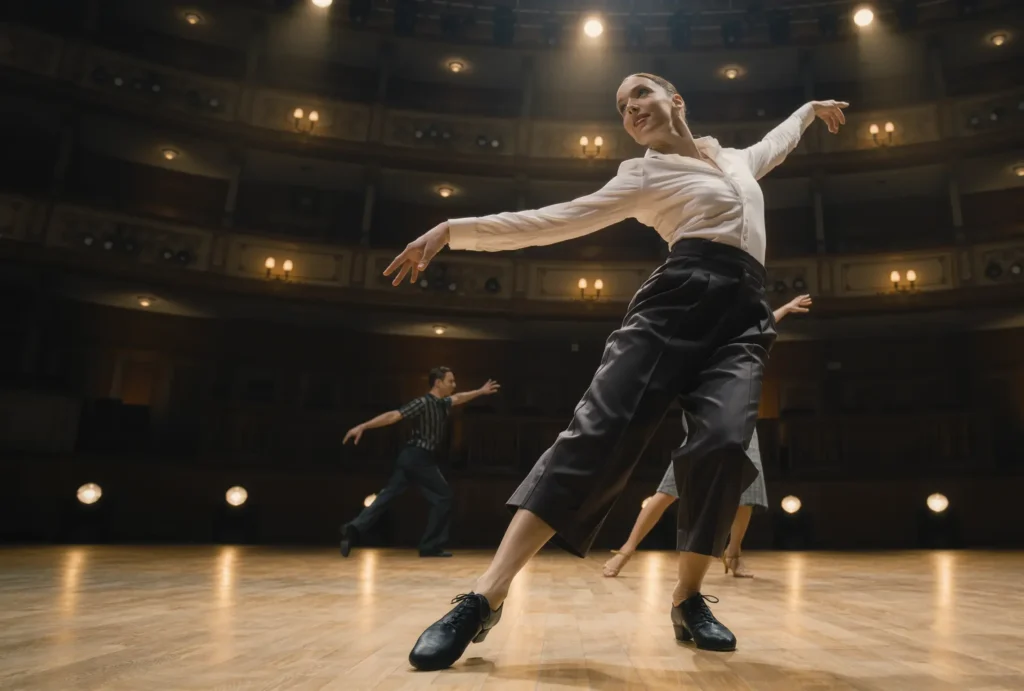
Most dancers have a dominant foot that leads everything. That’s fine at first, but in freestyle and battles you need to move freely in any direction.
Whenever you learn a footwork pattern, practice it leading with both feet and traveling both ways. Start with your weaker side while you’re fresh.
6. Connect Your Footwork to the Music
Footwork isn’t just about speed. It’s about rhythm. The best footwork follows the music: quick steps on busy hi-hats, heavier steps on the kick drum, pauses where the beat drops out.
Play a song and try to match your steps to specific sounds. This turns drills into dancing. Our guide on how to develop musicality and dance on beat goes deeper into hearing these layers.
7. Build Strong Legs and Ankles
Quick, controlled feet need strength behind them. Weak ankles and calves tire quickly and make landings sloppy.
Add these to your training a few times a week:
- Calf raises: 3 sets of 15, slow and controlled.
- Jump rope: 2 to 3 minutes. It’s one of the best footwork conditioning tools available.
- Lateral bounds: jump side to side on one leg, landing softly.
For a full workout, see the best leg exercises for dancers.
A 10-Minute Footwork Session
- 2 minutes: jump rope or light bouncing to warm up.
- 4 minutes: footwork drills from the table above.
- 3 minutes: one footwork pattern, slow then faster.
- 1 minute: freestyle footwork to a song.
Do this four or five times a week and you’ll notice sharper feet within a few weeks.
Common Footwork Mistakes
- Sitting back on your heels.
- Crossing feet when they shouldn’t.
- Rushing speed before control.
- Only leading with one foot.
- Stomping instead of placing each step.
Frequently Asked Questions
How can I improve my dance footwork fast?
Practice footwork drills daily in short sessions, stay on the balls of your feet, and build speed gradually from a slow, clean version of each pattern.
What are the best footwork drills for dancers?
Quick taps, side shuffles, ball changes, box steps and jump rope are great starting drills for almost every style.
Why is my footwork sloppy?
Usually because you’re going faster than your control allows, your weight is too far back, or you’re watching your feet instead of feeling the pattern.
Can I practice footwork in a small space?
Yes. Most footwork drills need only a square meter or two, which makes them perfect for home practice.
The Bottom Line
To improve dance footwork, slow down first, stay light on the balls of your feet, drill consistently and connect your steps to the music. Train both sides, build strong ankles, and add speed only when the pattern is clean. Your feet are often what decides how sharp your whole performance looks.
Leave a Reply