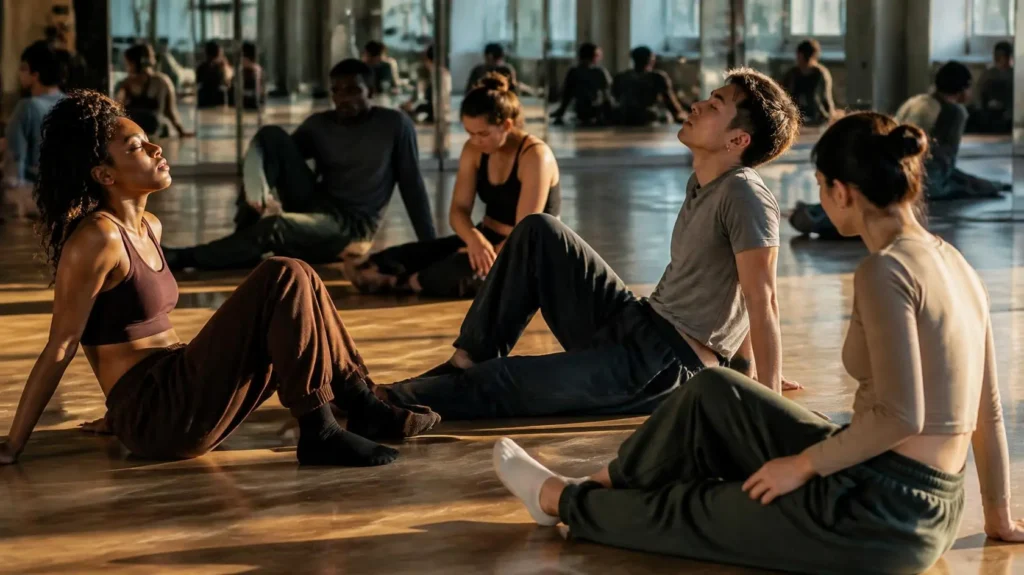
Most dancers know they should warm up. Far fewer bother to cool down. After a hard session, it’s tempting to grab your bag and leave. But a few minutes of cooldown after dance practice helps your body shift from high intensity back to rest, eases tightness and can help you feel better the next day.
Here’s a simple cooldown routine you can do in 8 to 10 minutes.
Why Cool Down?
- Brings your heart rate down gradually instead of stopping abruptly.
- Reduces muscle tightness after intense movement.
- Ideal time for stretching, since your muscles are warm.
- Helps you mentally switch off and reflect on the session.
- Supports recovery as part of a healthy routine.
The 3 Phases of a Good Cooldown
- Slow down: light movement to lower your heart rate.
- Stretch: static stretches for the muscles you worked.
- Breathe and reset: calm breathing to relax your body and mind.
A 10-Minute Cooldown Routine
Phase 1: Slow Down (2–3 minutes)
- Easy grooving to slow music: gentle bounces, weight shifts and sways.
- Walking around the room, shaking out your arms and legs.
- Slow arm and shoulder circles.
Keep the intensity low. You should be able to talk comfortably.
Phase 2: Stretch (5–6 minutes)
Hold each stretch for 20 to 30 seconds per side.
| Stretch | Targets |
|---|---|
| Standing calf stretch (against a wall) | Calves and ankles |
| Standing quad stretch | Front of thighs |
| Seated hamstring stretch | Back of thighs |
| Figure-four stretch (lying down) | Glutes and hips |
| Kneeling hip flexor stretch | Front of hips |
| Child’s pose | Lower back and shoulders |
| Cross-body shoulder stretch | Shoulders |
| Wrist flexor and extensor stretch | Wrists and forearms |
Add wrist stretches especially if you did floorwork, freezes or breaking.
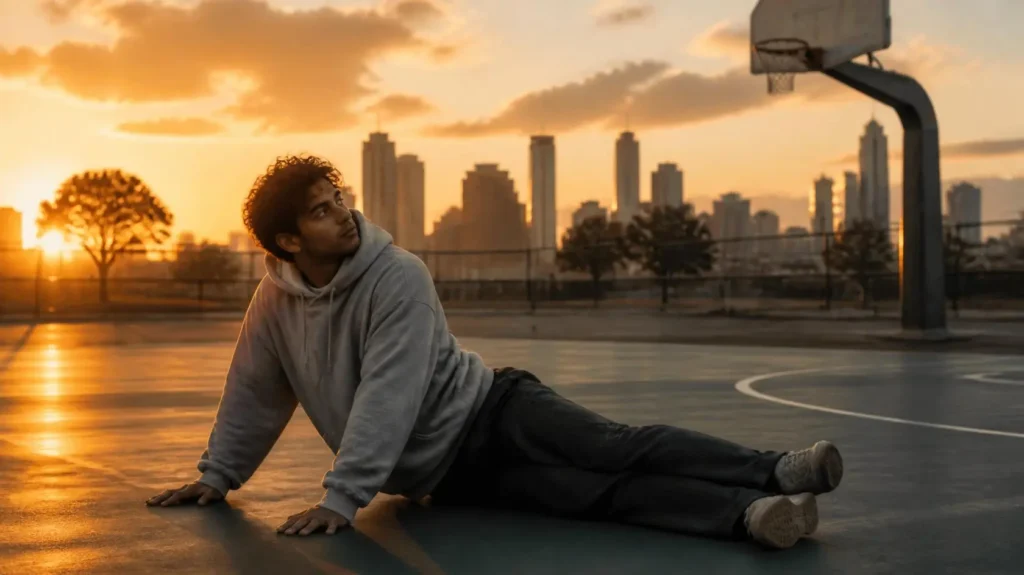
Phase 3: Breathe and Reset (1–2 minutes)
Lie on your back with knees bent or legs long. Close your eyes and breathe slowly: in for 4 counts, out for 6 to 8 counts. Let your body relax completely.
Use this moment to reflect: what went well today? What will you work on next time?
Tailor Your Cooldown
- After jump-heavy sessions: spend extra time on calves, quads and hip flexors.
- After breaking or floorwork: focus on wrists, shoulders, hips and lower back.
- After a battle or performance: keep it gentle and focus on calming your breathing.
Make It a Habit
The hardest part of a cooldown is remembering to do it. Try:
- Building it into the end of every practice playlist.
- Doing it with your crew so it becomes part of the session.
- Treating it as the moment you review your session.
For more recovery strategies, see best recovery methods for dancers. And don’t forget the other end of your session: why you should always warm up before dancing.
Frequently Asked Questions
Why should dancers cool down after practice?
Cooling down lowers your heart rate gradually, eases muscle tightness and is the best time to stretch while muscles are warm.
How long should a dance cooldown be?
Around 8 to 10 minutes is enough for most sessions.
What should a cooldown include?
Light movement to slow your heart rate, static stretches for worked muscles, and calm breathing.
Does cooling down prevent soreness?
It may help you feel looser, but soreness depends on many factors. Sleep, nutrition and recovery habits matter too.
The Bottom Line
A cooldown after dance practice takes just 10 minutes: slow down, stretch the muscles you worked and finish with calm breathing. It helps your body recover, keeps you flexible and gives you a moment to reflect on your training. Make it a habit and your body will feel the difference.
Leave a Reply