
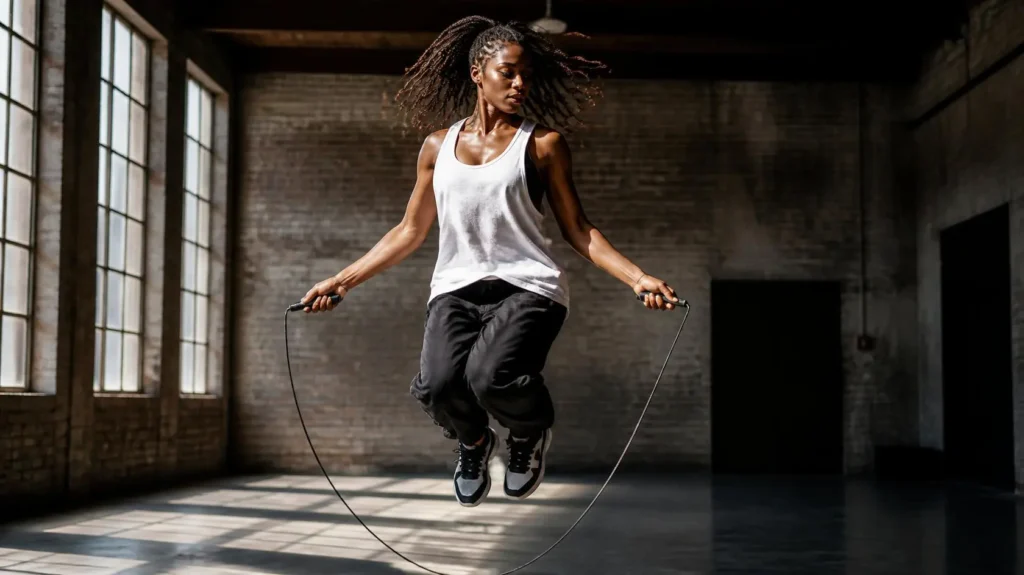
Running is often the first thing people suggest when you want more stamina. But plenty of dancers hate it, and many don’t need it. Running adds repetitive impact on top of all the jumping and landing you already do, and it doesn’t train the stop-start, multi-directional movement dance actually requires.
The good news: you can build serious dance endurance without running a single kilometer. Here’s how.
Why Running Isn’t Essential for Dancers
Running does build aerobic fitness, but it has limitations for dancers:
- It’s one-directional. Dance moves in every direction, with constant changes of speed.
- It adds impact. Your legs and joints already take a lot of load from dance.
- It isn’t specific. It won’t train the exact muscles and rhythms you use when dancing.
The methods below build endurance in ways that transfer more directly to dance.
1. Dance Intervals
The most specific endurance training is dancing itself, structured into intervals.
Battle-round intervals:
- 45 seconds of full-out freestyle.
- 45 to 60 seconds of light grooving or rest.
- Repeat 8 to 10 times.
Routine repeats:
- Run your full choreography.
- Rest for half the routine’s length.
- Repeat 3 to 5 times.
These train you for exactly what performances and battles demand.
2. Jump Rope
Jump rope is one of the best endurance tools for dancers. It builds stamina, rhythm, footwork speed and ankle strength all at once, and it’s lower impact than running when done lightly on the balls of your feet.
Try: 30 seconds of skipping, 30 seconds of rest, for 10 to 15 rounds. Progress to longer work periods.
3. Cycling
Cycling, whether on a stationary bike or outdoors, builds leg endurance with almost no impact. It’s ideal for longer, steady sessions of 20 to 40 minutes, or intervals of 30 seconds hard and 60 seconds easy.
4. Swimming
Swimming builds aerobic fitness, full-body endurance and breathing control, with zero impact. It’s also a great active recovery option on lighter days.
5. Bodyweight Circuits
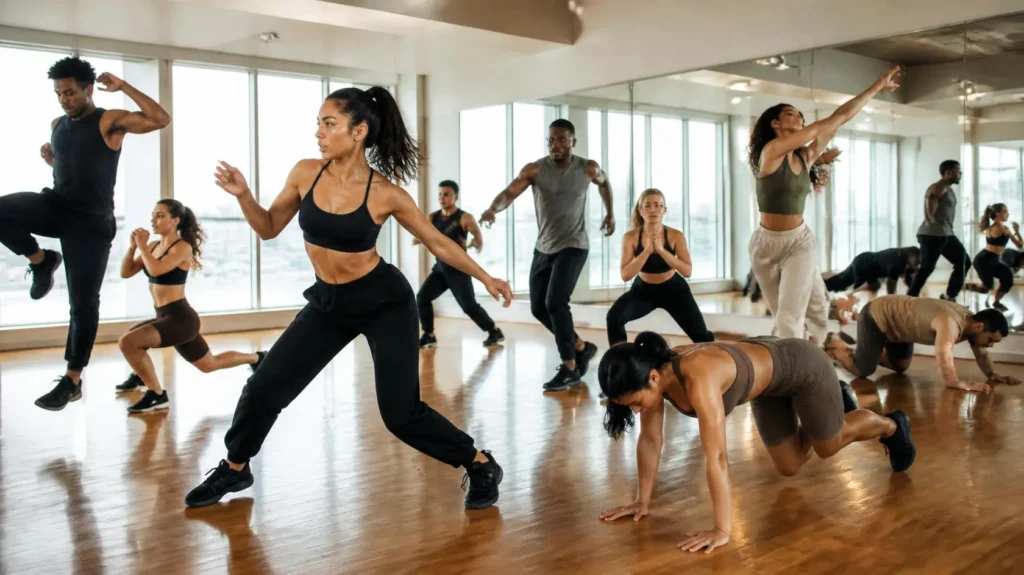
Circuits combine strength and conditioning. Move from one exercise to the next with little rest:
| Exercise | Time |
|---|---|
| Squat jumps | 30 seconds |
| Mountain climbers | 30 seconds |
| Lateral skaters | 30 seconds |
| Push-ups | 30 seconds |
| High knees | 30 seconds |
| Rest | 60 seconds |
Repeat the circuit 3 to 4 times.
6. Rowing or Elliptical
If you have access to a gym, rowing machines and ellipticals provide excellent low-impact conditioning. Rowing is especially good for breakers because it also builds upper-body and core endurance.
A Weekly No-Running Endurance Plan
| Day | Session |
|---|---|
| Monday | Dance practice + battle-round intervals |
| Tuesday | Strength training |
| Wednesday | Cycling or swimming (30 min) |
| Thursday | Dance practice + routine repeats |
| Friday | Jump rope intervals + bodyweight circuit |
| Saturday | Light active recovery |
| Sunday | Rest |
For more on how cardio supports dance, see how cardio training improves dance performance and how to build dance stamina for longer performances.
Frequently Asked Questions
Can I build stamina for dance without running?
Yes. Dance intervals, jump rope, cycling, swimming, bodyweight circuits and rowing all build endurance effectively.
What is the best low-impact cardio for dancers?
Cycling and swimming are excellent low-impact options. Jump rope is also very effective and highly dance-specific.
How often should I do endurance training?
Two or three endurance-focused sessions a week, on top of regular dance practice, works for most dancers.
Is dancing itself enough cardio?
It can be, if you structure it into continuous sessions or intervals. Stop-start class practice usually isn’t enough on its own.
The Bottom Line
You don’t need to run to build dance endurance. Dance intervals, jump rope, cycling, swimming and bodyweight circuits all build stamina while being kinder to your joints and more specific to how you actually move. Mix a few of these into your week and you’ll last longer and stay sharper on the floor.
Leave a Reply