
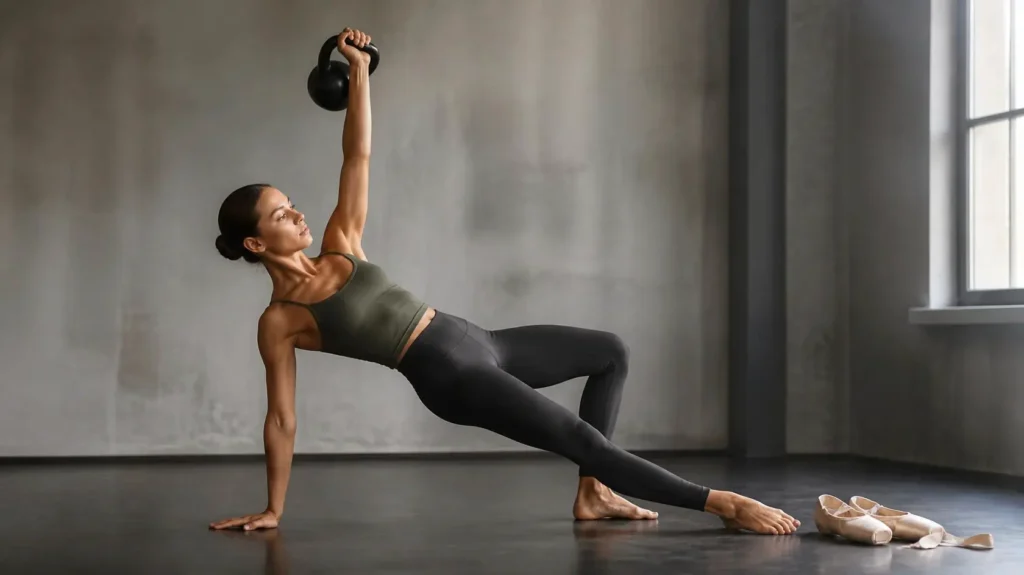
Many dancers want to get stronger, but worry about the side effects: feeling stiff, losing flexibility, getting sore legs before rehearsal or feeling heavy on the floor. Those worries are fair. The wrong kind of training, at the wrong time, can get in the way of your dancing.
The answer is functional strength for dancers: strength that transfers directly to how you move. Here’s how to build it without hurting your performance.
What Is Functional Strength?
Functional strength is strength you can actually use. For dancers, that means:
- Strength through a full range of motion, not just the middle.
- Strength on one leg, since that’s where dancers spend so much time.
- Strength that’s fast, for jumps, hits and power moves.
- Strength that’s stable, so you can control and stop movement.
Training for these qualities makes you a better dancer. Training only for bigger muscles doesn’t necessarily do that.
Common Ways Strength Training Hurts Dancing (and the Fixes)
| Problem | Fix |
|---|---|
| Feeling stiff after lifting | Train through full range and keep stretching |
| Heavy legs before rehearsal | Schedule leg days away from intense dance sessions |
| Losing flexibility | Pair strength work with daily mobility |
| Feeling slow | Include explosive and plyometric exercises |
| Too much soreness | Progress gradually and manage volume |
1. Train Through Full Range of Motion
Short, partial reps build strength in a limited range. Full-range movements, like deep squats, full lunges and complete push-ups, build strength through the positions dancers actually use. This keeps you strong and mobile.
2. Prioritize Single-Leg Exercises
Dancers balance, push off and land on one leg constantly. Exercises like Bulgarian split squats, step-ups, single-leg deadlifts and single-leg calf raises build strength and balance together.
3. Add Speed and Power
Slow, heavy lifting has value, but dancers also need to produce force quickly. Include explosive exercises like jump squats, medicine ball throws and skater jumps. See how to build explosive strength for dance jumps.
4. Keep Volume Moderate
You don’t need to train like a bodybuilder. Two or three sessions a week of 5 to 7 exercises, 3 to 4 sets of 6 to 12 reps each, is plenty for most dancers. Enough to get stronger, not so much that it drains your energy for dancing.
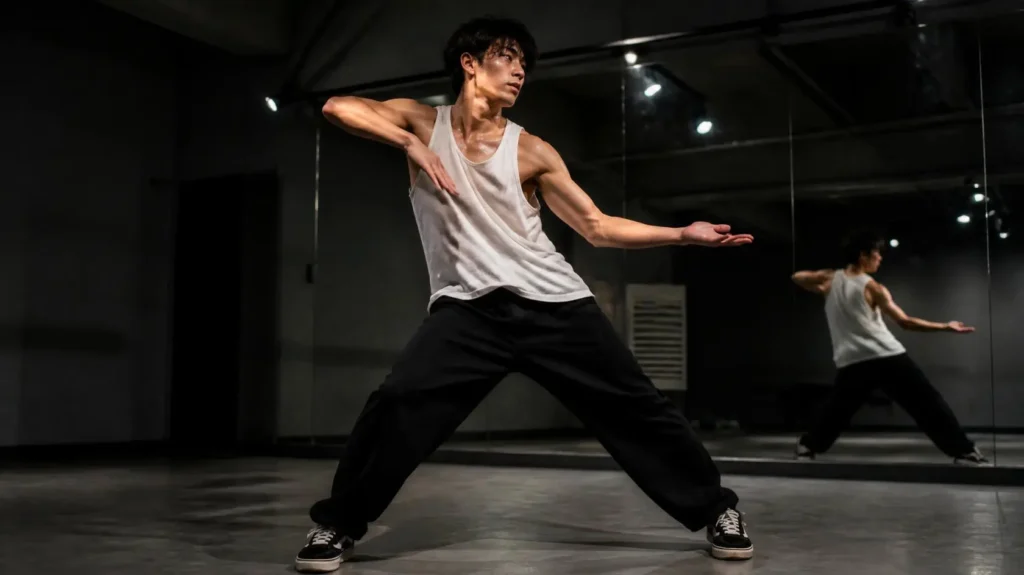
5. Schedule Smartly
Timing makes a big difference:
- Avoid heavy leg work the day before a big performance, battle or rehearsal.
- Lift after dance practice rather than before, so your dancing isn’t affected by tired muscles.
- Reduce strength volume in the week before major events.
6. Never Drop Mobility Work
Strength and flexibility work best together. Keep up daily mobility and stretching so new strength doesn’t come with lost range. Try our daily mobility exercises for dancers and 10-minute stretching routine.
7. Focus on Performance, Not Appearance
The best measure of good dancer strength training isn’t how you look in the mirror. It’s how you dance. Are your jumps higher? Your turns more stable? Your freezes held longer? Your landings softer? Track those results.
A Sample Functional Strength Session
- Bulgarian split squat: 3 x 8 each leg
- Single-leg Romanian deadlift: 3 x 8 each leg
- Jump squats: 3 x 6
- Push-ups: 3 x 10 to 12
- Dumbbell row: 3 x 10 each arm
- Single-leg calf raise: 3 x 12 each leg
- Dead bug: 3 x 8 each side
Frequently Asked Questions
Can dancers get stronger without losing flexibility?
Yes. Train through full range of motion and keep regular stretching and mobility work in your routine.
Will strength training make me feel heavy when I dance?
Not if you manage volume, include explosive exercises and schedule leg sessions away from intense dance days.
What’s the best strength training for dancers?
A mix of full-range compound lifts, single-leg exercises, explosive movements and core stability work, two or three times a week.
Should I lift before or after dance practice?
After is usually better, so your dance training isn’t affected by tired muscles.
The Bottom Line
To get stronger without hurting your dancing, focus on functional strength: full-range, single-leg, explosive and stable. Keep volume moderate, schedule around your dance commitments and never drop your mobility work. Measure success by how you dance, and strength will make you better, not stiffer.
Leave a Reply