Hard training doesn’t make you better on its own. Recovery is when your body actually rebuilds, gets stronger and adapts. Skip it, and you’ll feel sore, tired and flat, and your risk of injury goes up.
This guide covers practical recovery for dancers: what to do in the hours and days after a tough session so you can come back stronger. (For why rest matters so much in the first place, see why rest and recovery are important for dancers.)
1. Sleep: The Most Powerful Recovery Tool
Nothing beats sleep. During deep sleep, your body repairs muscle tissue, restores energy and consolidates the movement patterns you practiced.
- Aim for 7 to 9 hours a night.
- Keep a consistent schedule, even on weekends.
- Limit screens for 30 to 60 minutes before bed.
- Keep your room cool and dark.
If you’re training hard and sleeping badly, improving sleep will likely help more than anything else on this list.
2. Cool Down After Every Session
Ending a session abruptly leaves your heart rate high and muscles tight. A 5 to 10 minute cooldown, with easy movement followed by gentle stretching, helps your body shift into recovery mode. See best cooldown exercises after dance practice.
3. Hydrate
Dancing makes you sweat, especially in hot studios or crowded battle venues. Even mild dehydration can leave you tired and achy. Drink water throughout the day and after training, more in hot weather.
4. Eat to Recover
Your body needs fuel to rebuild. After hard training, eat a balanced meal or snack that includes protein and carbohydrates within a couple of hours. Simple options: rice with chicken or tofu, eggs on toast, yogurt with fruit, or a smoothie.
5. Active Recovery
Light movement on rest days increases blood flow and often eases soreness better than total inactivity. Try:
- An easy walk.
- Gentle cycling or swimming.
- Light mobility work or yoga.
- Slow, relaxed grooving at low intensity.
Keep it easy. The goal is movement, not training.
6. Foam Rolling and Self-Massage
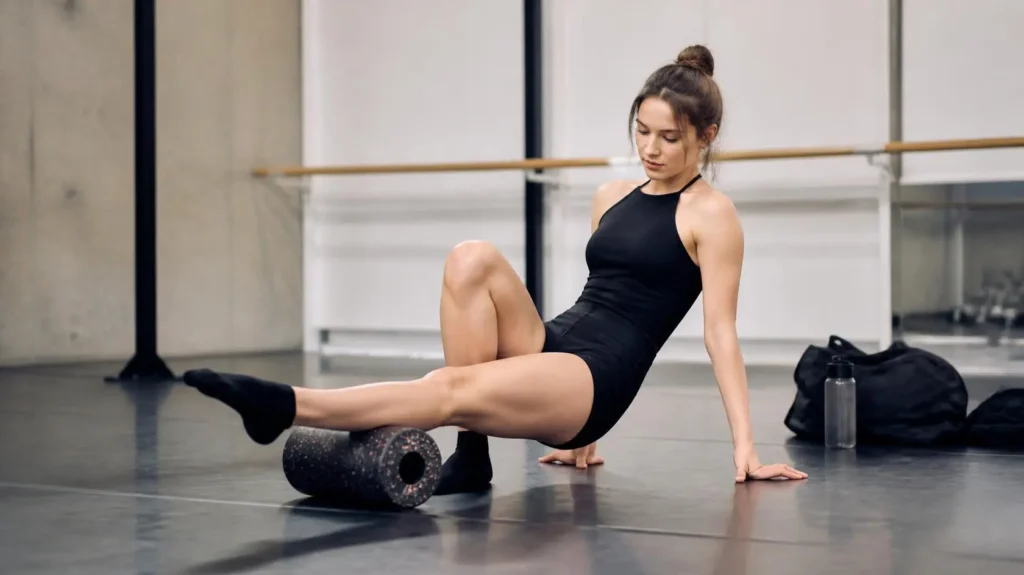
Foam rolling can help relieve muscle tightness and make you feel looser. Spend 30 to 60 seconds rolling slowly over calves, quads, hamstrings, glutes and upper back. Avoid rolling directly on joints or bones.
7. Stretching and Mobility
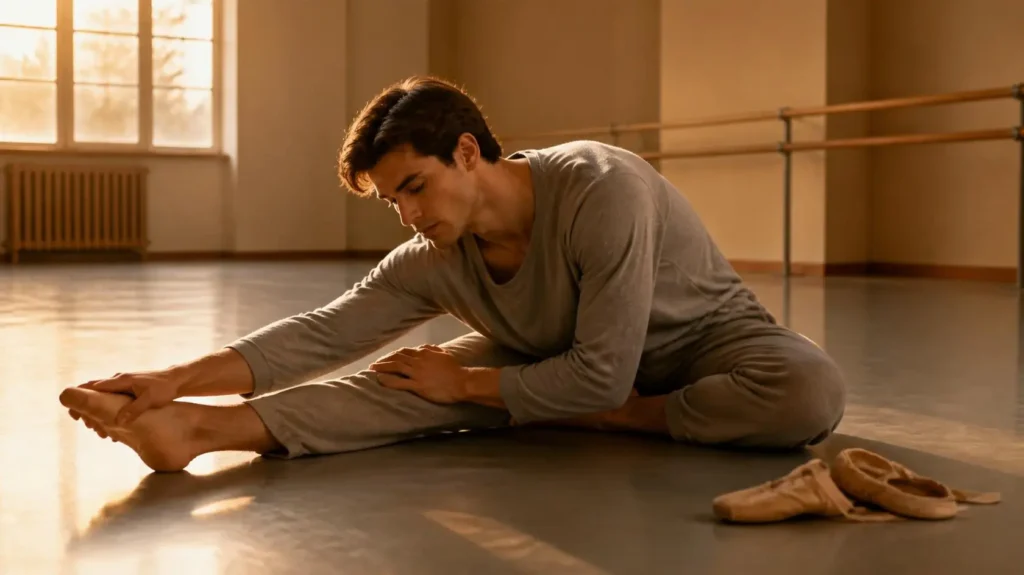
Gentle stretching after training and daily mobility work help keep muscles from tightening up. Follow our 10-minute daily stretching routine for dancers.
8. Plan Easier Days
Not every session should be maximum intensity. Alternate harder and lighter days. After a big event or battle, give yourself a lighter day or two before pushing again.
Recovery Methods at a Glance
| Method | When | Why it helps |
|---|---|---|
| Sleep | Every night | Repairs muscles and restores energy |
| Cooldown | End of every session | Brings heart rate down, reduces tightness |
| Hydration | All day | Prevents fatigue and cramping |
| Nutrition | Within a few hours of training | Fuels repair |
| Active recovery | Rest days | Boosts blood flow, eases soreness |
| Foam rolling | After training or on rest days | Relieves tightness |
| Stretching | After training | Maintains flexibility |
When Soreness Isn’t Normal
Normal muscle soreness feels achy and fades within two or three days. Sharp pain, joint pain, swelling or pain that gets worse with movement may be an injury. Rest and see a doctor or physiotherapist.
Frequently Asked Questions
What’s the fastest way for dancers to recover?
Prioritize sleep, hydrate, eat a balanced meal with protein and carbohydrates, cool down after training and use light active recovery on rest days.
How do I get rid of sore muscles after dance?
Light movement, gentle stretching, foam rolling, hydration and sleep all help. Soreness usually fades in two or three days.
Is it okay to dance when I’m sore?
Light dancing is usually fine and can help. Avoid intense sessions when very sore, and stop if you feel sharp pain.
Do dancers need rest days?
Yes. Rest days let your body adapt and reduce injury risk.
The Bottom Line
Recovery for dancers is just as important as training. Sleep well, cool down, hydrate, eat to refuel, keep moving lightly on rest days and plan easier sessions. Recover well, and every hard session you put in will actually pay off.
Leave a Reply