
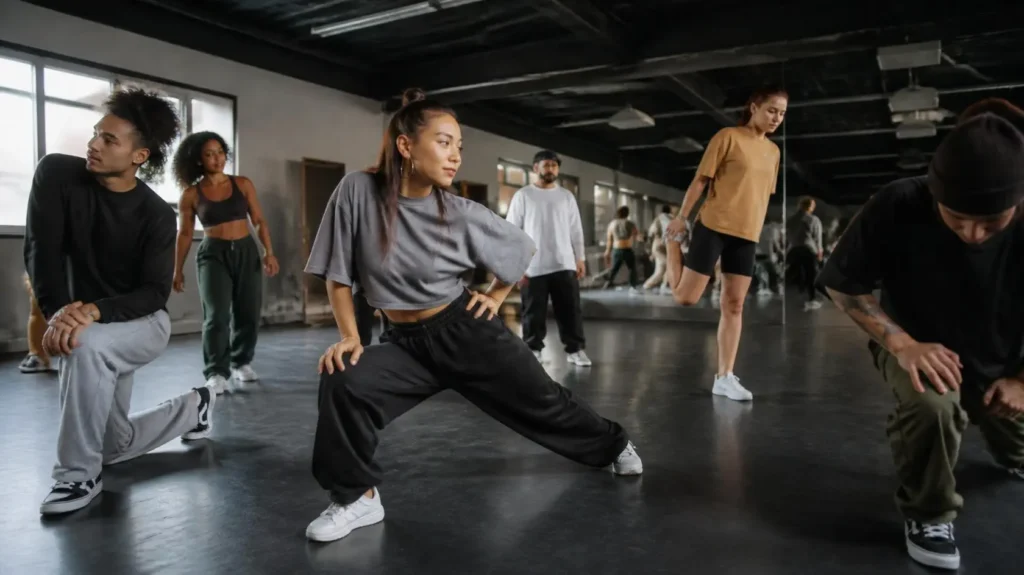
It’s tempting to skip it. You’re excited to dance, the music is on, and the warm-up feels like wasted time. But going straight into hard dancing on a cold body is one of the most common ways dancers get hurt and one of the easiest ways to waste the first part of a session.
Here’s why you should always warm up before dancing, plus a simple routine you can use every time.
What a Warm-Up Actually Does
A good warm-up prepares your body and mind for dance:
- Raises your body temperature, making muscles more pliable and responsive.
- Increases blood flow to your muscles, delivering more oxygen.
- Loosens your joints by moving them through their range.
- Wakes up your nervous system, improving coordination and reaction time.
- Gets your mind focused on dancing.
Why Skipping It Costs You
More Injury Risk
Cold muscles and tendons are stiffer and less able to handle sudden force. Jumps, kicks, splits and fast direction changes on a cold body increase the risk of strains and pulls.
Worse Performance
Without a warm-up, your first 10 to 15 minutes of dancing are often stiff and uncoordinated. You’ll jump lower, turn less cleanly and feel off the music. A warm-up lets you dance well from the start.
Worse Flexibility
Muscles stretch more easily and safely when they’re warm. Trying to drop into deep positions cold is uncomfortable and risky. See how to improve flexibility for dance safely.
What a Good Dance Warm-Up Includes
A strong warm-up moves from general to specific:
- Raise: light cardio to raise your heart rate and temperature.
- Mobilize: move your joints through their full range.
- Activate: wake up key muscles like glutes, core and calves.
- Prepare: dance-specific movements at increasing intensity.
A 10-Minute Dance Warm-Up Routine
| Phase | Exercises | Time |
|---|---|---|
| Raise | Light jogging on the spot, skipping, easy grooving | 2–3 min |
| Mobilize | Neck rolls, shoulder circles, hip circles, spinal waves, ankle circles | 2–3 min |
| Activate | Glute bridges, squats, calf raises, plank | 2 min |
| Prepare | Leg swings, lunges with a twist, footwork drills, gradual freestyle | 3 min |
Adjust Your Warm-Up to the Session
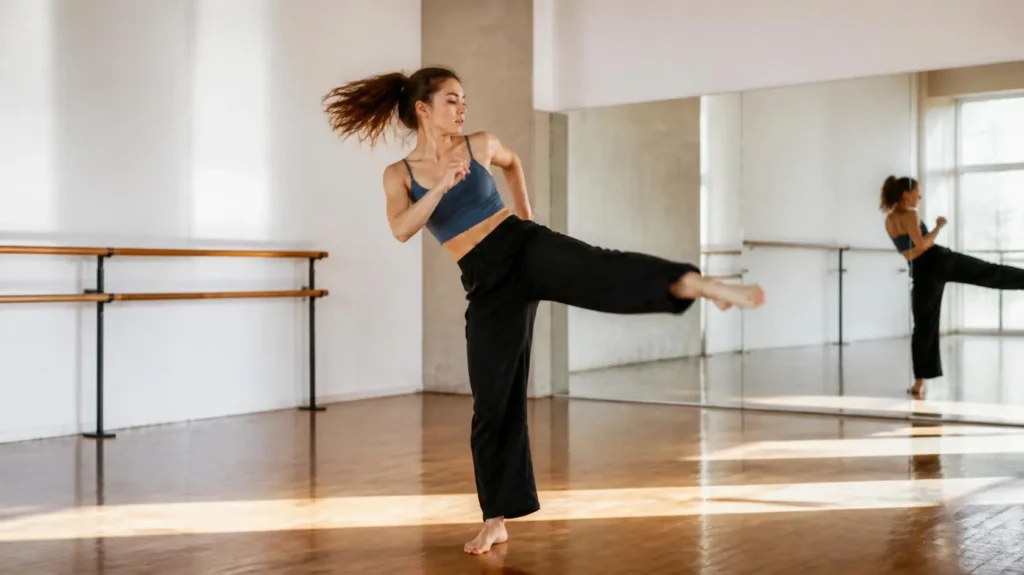
- For jump-heavy or power sessions: add extra calf raises, pogo hops and small jumps.
- For flexibility-heavy styles: include more dynamic leg swings and hip openers.
- For breaking and floorwork: add wrist circles, shoulder mobility and light handstand or plank work.
- Before a battle: keep your body warm between rounds by grooving, bouncing and staying loose.
Dynamic, Not Static
Save long, held stretches for after dancing. Before dancing, use dynamic movements: stretches that move, like leg swings and arm circles. They prepare your body for movement without reducing power. Use your static stretches for the end: see 10-minute daily stretching routine for dancers and best cooldown exercises after dance practice.
Frequently Asked Questions
Why is it important to warm up before dancing?
Warming up raises body temperature, increases blood flow, loosens joints and sharpens coordination, reducing injury risk and improving performance.
How long should a dance warm-up be?
About 10 to 15 minutes for most sessions. Longer for very intense training or cold environments.
Should I stretch before dancing?
Use dynamic stretches before dancing. Save long, static stretches for afterwards.
What should a dance warm-up include?
Light cardio, joint mobility, muscle activation and dance-specific movement at gradually increasing intensity.
The Bottom Line
You should always warm up before dancing. It reduces injury risk, improves your movement from the very first count and makes your training more effective. Ten minutes of raising, mobilizing, activating and preparing is all it takes, and your body will thank you every session.
Leave a Reply